
How to Choose High-Density Employee Lockers: A Complete Guide to Knockdown Steel 12-Door Designs
Meta Description: Looking for space-saving employee lockers? Learn why knockdown 12-door steel lockers (1850×900×420mm) are the smart choice for high-density workplaces — durable, ventilated, and easy to relocate.
If you manage a factory floor, a gym, a school, or any workplace where dozens — or hundreds — of employees need personal storage, you already know the challenge: how do you fit enough lockers without turning your space into a maze?
The answer isn’t “buy more lockers.” It’s choosing the right locker system from the start.
In this guide, we break down why knockdown (assembly-required) 12-door steel lockers have become the go-to solution for high-density employee areas — and what to look for before you buy.
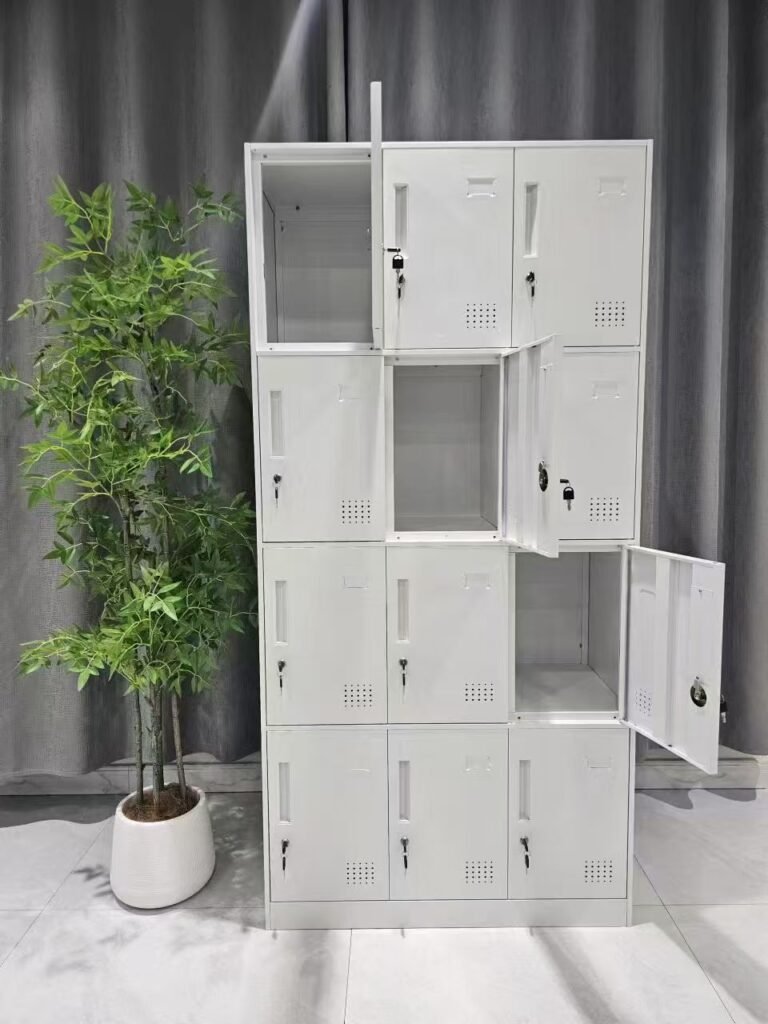
What Is a Knockdown 12-Door Steel Locker?
A knockdown locker ships flat-packed in panels and hardware. Instead of arriving as a fully welded, monolithic unit, the locker is assembled on-site using bolts, cam locks, or interlocking joints.
A standard 12-door steel locker at 1850mm (H) × 900mm (W) × 420mm (D) provides 12 individual compartments in a single vertical column — six doors on each side of a double-tier layout. Each compartment typically measures around 300mm wide × 450mm high, enough for a backpack, work clothes, shoes, and personal items.
This configuration packs maximum storage into a minimal footprint: less than 0.4 square meters of floor space per unit.
Why Knockdown Design Beats Welded Construction
1. Flat-Packed Shipping Cuts Logistics Costs
Welded lockers are bulky. A fully assembled 1850mm-tall unit takes up significant truck space, which means higher shipping costs — especially for bulk orders.
Knockdown lockers ship flat. You can fit 3–4 times more units on a single pallet compared to welded equivalents. For facilities ordering 50+ lockers, the freight savings alone can be substantial.
2. Easy Assembly Without Specialized Tools
Most knockdown steel lockers are designed for straightforward on-site assembly. A standard unit can be put together by two people in 20–30 minutes using basic hand tools (wrench, screwdriver, rubber mallet).
No welding equipment. No professional installers required. This is a significant advantage for facilities in remote locations or for projects with tight timelines.
3. Relocate Without Dismantling the Building
Here’s a scenario many facility managers face: the company moves to a new building, or the locker room layout needs to be reconfigured. With welded lockers, you’re looking at hiring movers, dealing with narrow doorways, and potentially damaging the units — or the walls.
Knockdown lockers can be disassembled and reassembled at the new location. Panels stack flat for transport, and reassembly is just as quick as the initial setup. This alone makes knockdown designs a long-term cost saver for growing businesses.
Durability: Cold-Rolled Steel Built to Last
The best knockdown lockers are constructed from 0.6–0.8mm cold-rolled steel with a powder-coated finish. Here’s why that matters:
- Corrosion resistance: Powder coating (typically 60–80 microns thick) protects against moisture, scratches, and chemical exposure — critical in gyms, factories, and pool areas.
- Impact resistance: Cold-rolled steel has a higher tensile strength than regular mild steel, meaning the locker panels resist dents and deformation from daily use.
- Load capacity: Each shelf in a quality 12-door locker should support 30–40kg without bending — enough for heavy work boots, tools, and wet gear.
Look for lockers with reinforced door frames and internal door stiffeners. These details prevent warping over time, especially in high-traffic environments where doors are opened and closed hundreds of times per day.
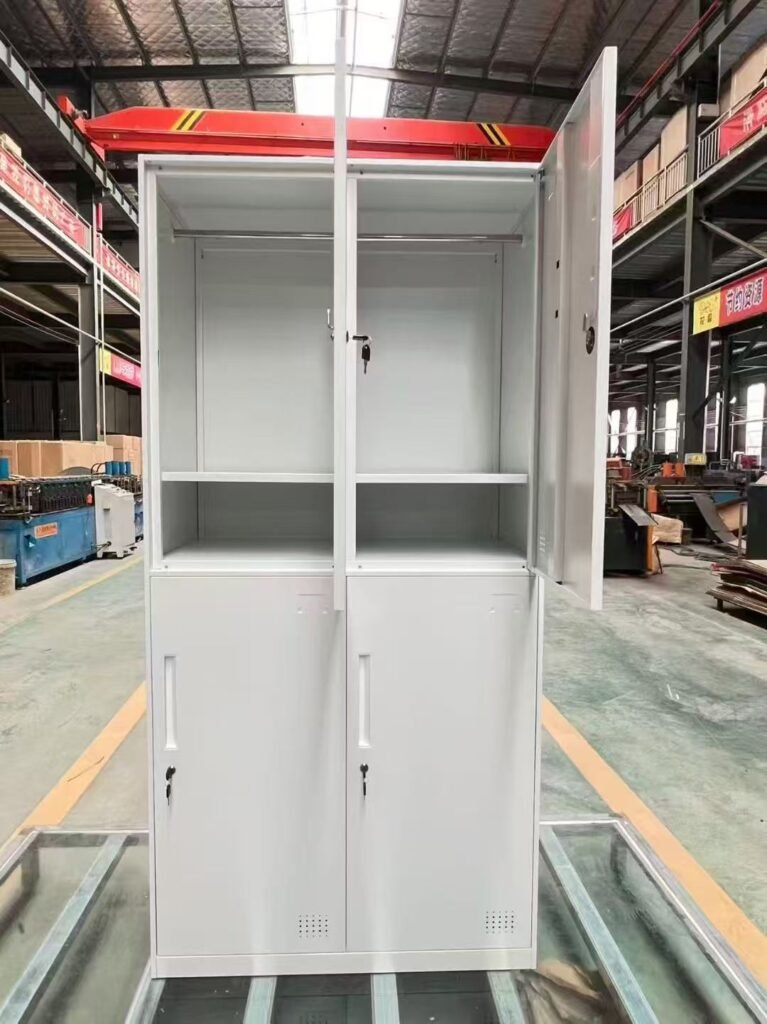
Ventilation: Why It Matters More Than You Think
In any high-density locker setup, airflow is non-negotiable. When employees store sweaty gym clothes, damp work uniforms, or wet shoes inside a sealed metal box, moisture builds up fast. Within 24–48 hours, you’re dealing with:
- Musty odors that spread through the entire locker room
- Mold and mildew growth on fabrics and locker interiors
- Rust formation on uncoated steel surfaces
Quality 12-door lockers address this with integrated ventilation:
- Perforated door panels: Small holes (typically 8–12mm diameter) punched in a pattern across each door, allowing passive air circulation.
- Top and bottom ventilation gaps: Openings at the top of the compartment and above the base allow warm, moist air to escape upward.
- Rear ventilation channels: Some designs include slots in the back panel to promote cross-ventilation when lockers are placed against a wall (with a small gap).
If you’re choosing lockers for a gym, pool facility, or any environment with high humidity, ventilation should be a top-three priority — right after durability and security.
Security Features to Look For
Each compartment in a 12-door locker needs its own locking mechanism. The most common options include:
| Lock Type | Security Level | Best For |
|---|---|---|
| Cam lock with key | Medium | General workplaces, schools |
| Hasp & staple (padlock) | Medium-High | Gyms, construction sites |
| Combination lock | Medium | Shared-use facilities |
| Electronic keypad lock | High | High-security environments |
For most high-density employee areas, cam locks with two keys per compartment (one for the user, one master key for management) offer the best balance of security and convenience.
Additionally, check for anti-pry door edges and reinforced lock housings — these details make it significantly harder for someone to force the door open with a tool.
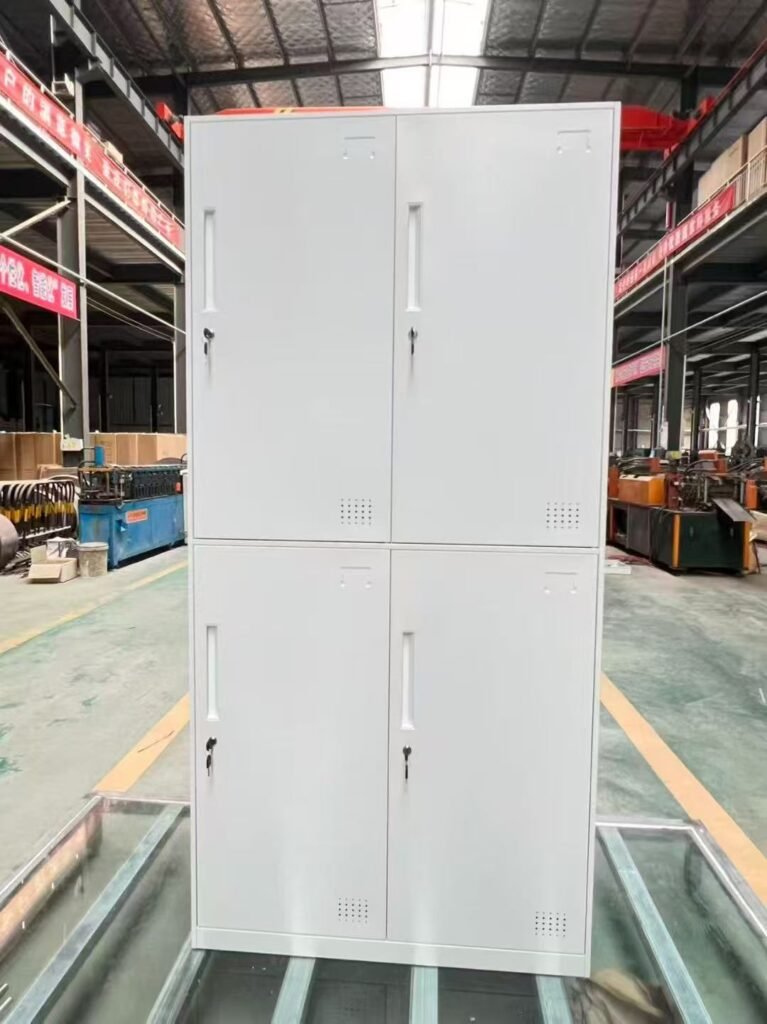
Space Planning: How Many 12-Door Units Do You Need?
A single 12-door locker unit occupies approximately 900mm × 420mm of floor space. To calculate how many units fit your locker room:
- Measure your available wall length (subtract 100mm clearance at each end).
- Divide by 900mm to get the maximum number of units per row.
- Multiply by 12 to get total compartment count.
Example: A 9-meter wall accommodates 10 units = 120 compartments.
Remember to leave at least 1200mm of clear aisle space in front of the lockers for comfortable access, per OSHA and international building code guidelines.
Knockdown vs. ready-assembled: Quick Comparison
| Feature | Knockdown | ready-assembled |
|---|---|---|
| Shipping volume | 60–70% less | Full size |
| Assembly | On-site, 20–30 min/unit | None required |
| Relocation | Disassemble & reassemble | Difficult, risk of damage |
| Structural rigidity | Slightly lower | Higher |
| Cost per unit | Lower | Higher |
| Customization | Easier to modify | Fixed configuration |
For most facilities, the cost savings in shipping and the flexibility of relocation far outweigh the marginal difference in structural rigidity.
Installation Tips for High-Density Layouts
- Anchor to the wall: Use L-brackets or wall straps to prevent tipping, especially for single-row installations.
- Leave a gap behind: Maintain at least 20–30mm between the locker back and the wall for ventilation.
- Level the floor: Uneven floors cause doors to misalign over time. Use shims if necessary.
- Stagger rows: In double-sided layouts, offset the rows slightly to improve airflow and reduce the “tunnel effect.”
Final Thoughts
A knockdown 12-door steel locker at 1850×900×420mm is one of the most practical storage solutions for high-density employee areas. It delivers the durability of welded steel, the ventilation needed for daily use, and the flexibility to relocate when your facility changes — all at a lower total cost of ownership.
Before you buy, verify the steel thickness, ventilation design, lock type, and assembly hardware quality. These details separate a locker that lasts five years from one that lasts twenty.
Invest in the right system once, and you won’t have to think about it again.
*Measurements and specifications mentioned are based on common industry standards. Always verify exact dimensions and load ratings with the manufacturer before purchasing.*