
Pathology Wax Block Cabinet Product Description
Product Overview
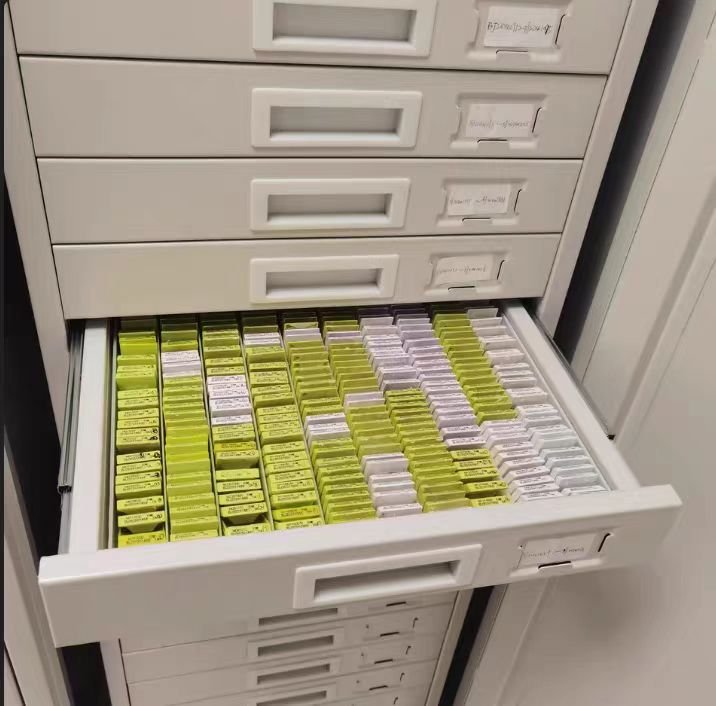
The Pathology Wax Block Cabinet (Slide Cabinet, Drying Cabinet), also known as Pathology Tissue Wax Block Storage Cabinet, is a high-efficiency storage device specially designed for hospital pathology departments, medical research institutions, biological laboratories, forensic identification centers, and biobanks. It consists of core components including high-quality cold-rolled steel cabinet body, high-load-bearing guide rails, precision-designed drawers, safety-detail design, and partition modules. It is mainly used for systematic and safe long-term storage of biological sections, drying slides, and tissue wax blocks generated during research processes, ensuring the integrity, traceability, and accessibility of these precious biological samples.
I. Product Parameters and Specifications
| Model | Overall Dimensions (H×W×D) | Single Unit Capacity | Complete Set Capacity | Notes |
|---|---|---|---|---|
| 515 Model Wax Block Cabinet | 1520×515×480mm | Can hold 3710 cassette cases of 7.8cm thickness (vertical placement) | Can hold 14840 cassette cases of 7.8cm thickness (vertical placement) | Four units per set, includes stainless steel base |
| 515 Model Slide Drying Cabinet | 1520×515×480mm | Can hold 1650 glass slides of 7.8cm length (horizontal placement) | Can hold 8250 glass slides of 7.8cm length (horizontal placement) | Four units per set, includes stainless steel base |
| 540 Model Lockable Wax Block Cabinet | 1700×515×540mm | Can hold 3990 cassette cases of 7.8cm thickness (vertical placement) | Can hold 15960 cassette cases of 7.8cm thickness (vertical placement) | Four units per set, includes stainless steel base |
| 515 Model Slide Cabinet | 1520×515×480mm | Can hold 1290 glass slides of 7.8cm length (vertical placement) | Can hold 51840 glass slides of 7.8cm length (vertical placement) | Four units per set, includes stainless steel base |
| 540 Model Lockable Slide Drying Cabinet | 1700×480×540mm | Can hold 1650 glass slides of 7.8cm length (horizontal placement) | Can hold 8250 glass slides of 7.8cm length (horizontal placement) | Four units per set, includes stainless steel base |
| 515 Model Six-Drawer Wax Block Cabinet | 1350×515×480mm | Can hold 442 cassette cases of 7.8cm thickness (vertical placement) | Can hold 13356 cassette cases of 7.8cm thickness (vertical placement) | Three units per set, includes stainless steel base |
| 540 Model Lockable Slide Cabinet | 1700×515×540mm | Can hold 14148 glass slides of 7.8cm length (vertical placement) | Can hold 56592 glass slides of 7.8cm length (vertical placement) | Four units per set, includes stainless steel base |
| 450 Model Slide Drying Cabinet | 1600×450×480mm | Can hold 1320 glass slides of 7.8cm length (horizontal placement) | Can hold 5080 glass slides of 7.8cm length (horizontal placement) | Four units per set, includes cold-rolled steel base |
| 450 Model Wax Block Cabinet | 1600×450×480mm | Can hold 3135 cassette cases of 7.8mm thickness (vertical placement) | Can hold 12540 cassette cases of 7.8mm thickness (vertical placement) | Four units per set, includes cold-rolled steel base |
| 450 Model Slide Cabinet | 1600×450×480mm | Can hold 14148 glass slides of 7.8cm length (vertical placement) | Can hold 56592 glass slides of 7.8cm length (vertical placement) | Four units per set, includes cold-rolled steel base |
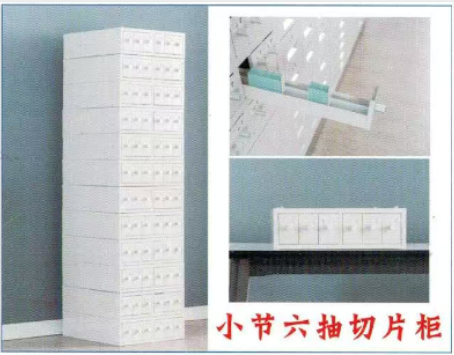
| Small Unit Six-Drawer Slide Cabinet | 1625×403×480mm | Can hold 4716 glass slides of 7.8cm length (vertical placement) | Can hold 56592 glass slides of 7.8cm length (vertical placement) | Twelve units per set, includes stainless steel base |
II. Product Details and Features
- Thickened Cold-Rolled Steel Plate: Smooth and flat surface, strong load-bearing capacity, high-temperature resistance, and wear resistance.
- Color: White
- Modular Storage Units: Drawers equipped with standard-sized cells or removable partition panels for easy adaptation to different specifications of wax blocks, slides, and case films, enabling categorized and zoned storage.
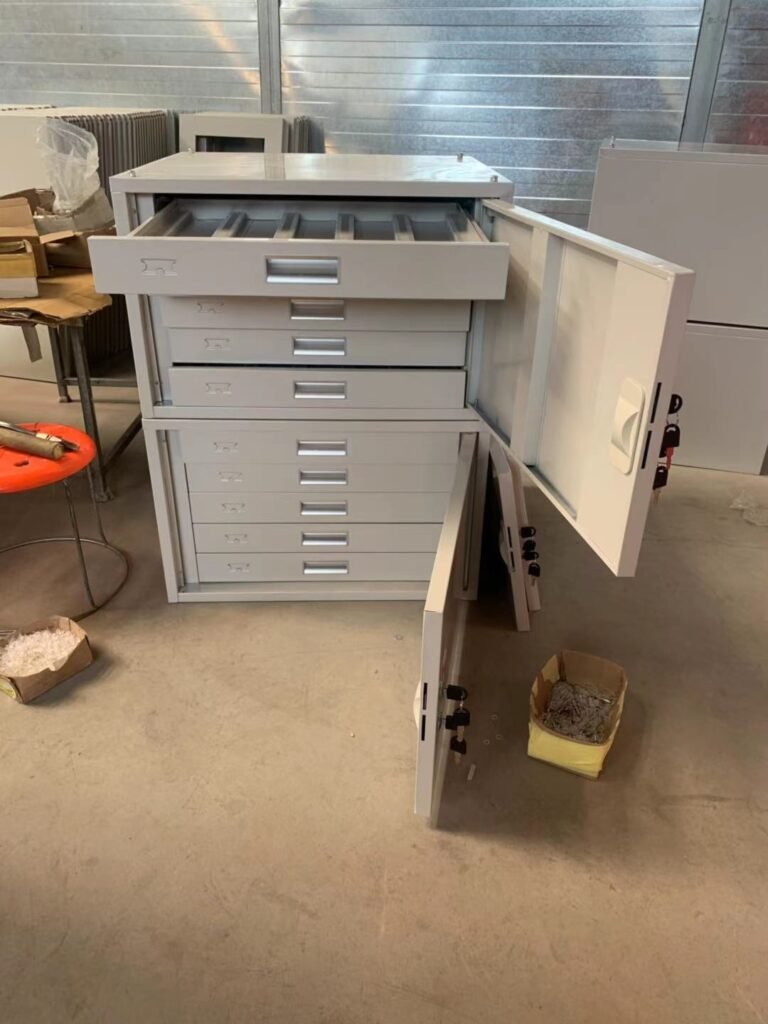
- User-Friendly Drawer Design: Drawers equipped with hardware handles (two options available) and silent guide rails for smooth and effortless sliding. Handle areas feature label slots for clear identification of case numbers, dates, or disease classifications.
- Stable Structure and Safety Design: Overall sturdy structure with strong load-bearing capacity. Some models equipped with drawer locks to protect pathological privacy and sample safety. Anti-tip bolt design ensures cabinet safety.
- Dust and Moisture Proof: Tight drawer closure design effectively prevents dust, while high-quality thickened cold-rolled steel material provides certain moisture resistance, and the stainless steel moisture-proof design of the cabinet base offers basic protection for samples.
- Easy to Clean: Smooth surface with rounded corners, no sanitary dead corners, convenient for daily cleaning and disinfection.
- Casters (Optional): Free movement, can be placed throughout the space, enhancing accessibility of wax block cabinets.
III. Product Advantages
- High Space Utilization: Three-dimensional storage design makes full use of space with large capacity, solving the problem of tight storage space for pathology wax blocks.
- Efficient and Convenient Management: Clear numbering significantly improves the efficiency of pathologists and technicians in finding, archiving, and returning specimens.
- Long-term Preservation Guarantee: Stable structure provides physical protection for the long-term integrity of pathology wax blocks as important medical archives.
- Standardization and Aesthetics: Uniform specifications and neat arrangement help pathology departments achieve 5S management, improving the overall professional image of the department. (5S: Sort, Set in Order, Shine, Standardize, Sustain)
- Sturdy and Durable: Uses high-quality metal materials and reliable craftsmanship, with long service life and high return on investment.
IV. Product Installation
- After unpacking, please check accessories and instructions.
- Place the cabinet on flat, solid, and ventilated ground, avoiding dampness, direct sunlight, or proximity to heat sources.
- For multi-unit cabinet combinations, please assemble in the order specified in the instructions to ensure secure connections.
- Install guide rails or drawers, and test to ensure smooth sliding.
- Install anti-tip bolts
- After installation, clean the interior of the cabinet and wait for it to dry before use.
V. Product Usage
- Preparation Before Archiving: Ensure that information labels on wax block cases are clear and secure.
- Categorized Storage: It is recommended to systematically store in zones according to department regulations (such as by year, case number order, or disease type).
- Proper Storage and Retrieval: Gently push and pull drawers, place and retrieve items in designated positions, avoiding forceful pulling that could cause structural deformation or wax block overturning.
- Information Registration: Use drawer label cards to update storage information in a timely manner, or integrate with the department’s information management system.
VI. Product Maintenance
- Daily Cleaning: Regularly wipe the exterior with a soft cloth dampened with neutral cleaner, and dry with a dry cloth after wiping with a wet cloth. Do not use corrosive or abrasive cleaners.
- Guide Rail Maintenance: Regularly check guide rail cleanliness, and add a small amount of special lubricant annually to maintain smoothness.
- Avoid Overloading: Strictly follow the designed load-bearing capacity, and do not place overweight items on drawers or cabinet top.
- Check Fasteners: Regularly check if connecting screws are loose and tighten them promptly.
- Problem Handling: If encountering drawer deformation, guide rail damage, or other issues, immediately stop use and contact professional personnel for repair.
VII. Product Application Locations
- Hospital pathology departments and archives
- Independent medical testing centers
- Pathology teaching and research offices, laboratories in medical colleges and medical research institutions
- Disease Prevention and Control Centers (CDC)
- Forensic pathology departments of judicial identification institutions
- Biobanks