
Steel Chinese Medicine Cabinets and Herb Storage Practices in Manhattan’s Chinatown, New York
Manhattan’s Chinatown in New York is one of North America’s most concentrated areas for Traditional Chinese Medicine (TCM) culture. TCM clinics, Chinese medicine pharmacies, ginseng and specialty herb shops, as well as TCM educational and research institutions have long coexisted here, creating stable and practical demands for herb storage methods, management efficiency, and environmental adaptability. Against this backdrop, steel Chinese medicine cabinets / herb drawer cabinets / medicinal herb storage cabinets have gradually become common professional storage equipment in the area.
This article provides an objective introduction to the role of steel Chinese medicine cabinets in medicinal herb storage, based on their actual structure and usage characteristics, combined with the spatial conditions and TCM usage scenarios in Manhattan’s Chinatown, without involving any sales or promotional content.
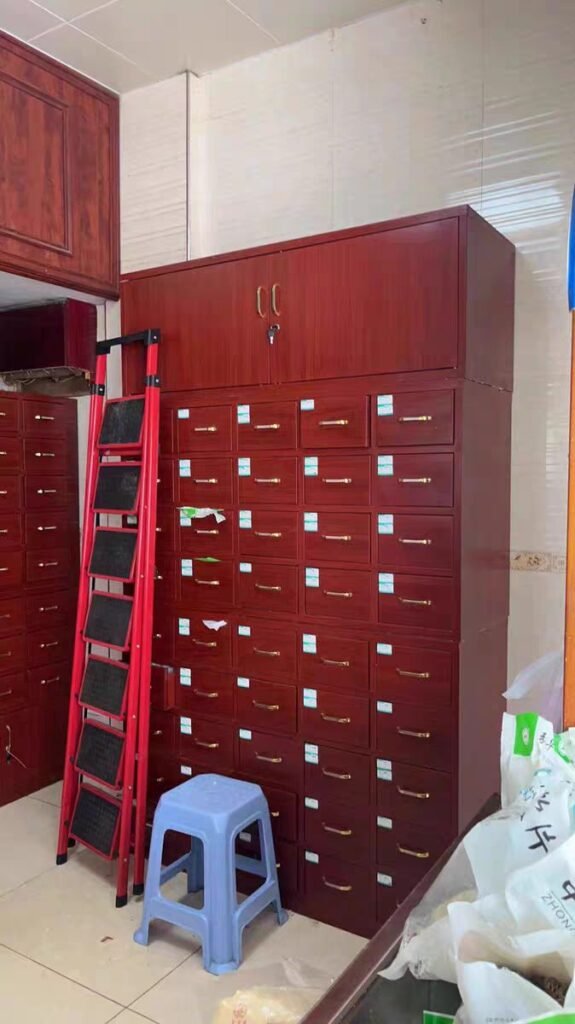
Characteristics of the TCM Environment in Manhattan’s Chinatown
Unlike large Chinese medicine pharmacies in China, TCM-related establishments in Manhattan’s Chinatown typically share the following characteristics:
- Shops and clinics have relatively compact spaces, mostly street-level or building units
- Wide variety of Chinese herbs, but with relatively controlled individual inventory quantities
- High frequency of use, emphasizing dispensing efficiency and operational safety
- High requirements for moisture-proof, insect-proof, and dust-proof storage
These practical conditions require that herb storage equipment not only possess the functional logic of traditional Chinese medicine pharmacies but also adapt to New York’s local architectural environment and usage patterns.
Practical Applications of Steel Chinese Medicine Cabinets in Chinatown
Stability Brought by Steel Structure
Steel Chinese medicine cabinets typically use cold-rolled steel sheets as the main structure, complemented by powder-coated surface treatment. This structure demonstrates good stability during long-term use and can withstand the wear caused by frequent opening and closing of herb drawers.
In Manhattan’s Chinatown, some TCM clinics and Chinese medicine pharmacies have long business hours, with herb drawers being opened repeatedly daily, placing high demands on cabinet structural durability. Steel cabinets are more likely to maintain overall flatness and drawer alignment in this regard.
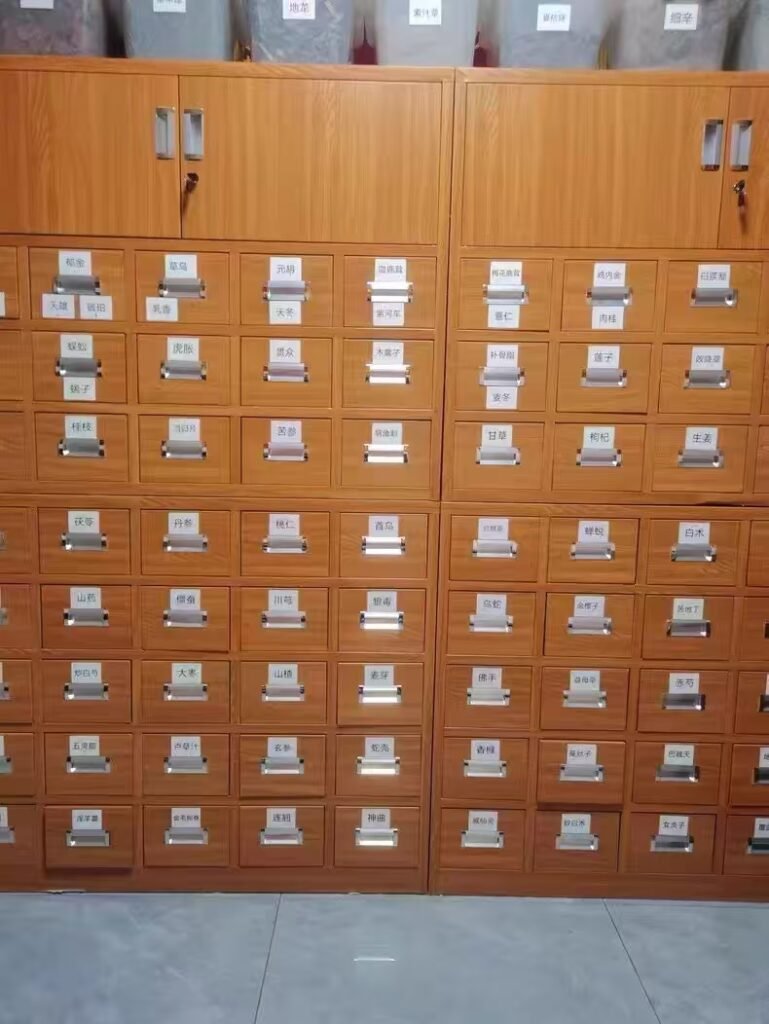
Classification Logic of Herb Drawer Cabinets
The core of herb drawer cabinets lies in their multi-drawer, multi-compartment design. Common practices include:
- Each herb drawer stores a single or small number of similar Chinese herbs
- Internal dividers within drawers for batch management of herbs
- Labeling systems using stainless steel slots or tags for herb names
In actual use in Chinatown, herbs are typically arranged by therapeutic category, pinyin initial letters, or prescription frequency. This structure helps reduce search time during consultations and herb dispensing.
Moisture-Proof, Insect-Proof, and Environmental Adaptation
New York has a typical temperate humid climate, with high summer humidity and significant indoor-outdoor temperature differences in winter. Chinese herbs are susceptible to moisture and pest damage during storage.
Steel medicinal herb storage cabinets in practical use usually incorporate the following design features:
- Fully enclosed herb drawers to reduce direct air contact
- ABS plastic base corners at the cabinet bottom, isolating the cabinet from the ground
- Surface coating reduces moisture adhesion and facilitates daily cleaning
These designs somewhat reduce the impact of ground moisture and pests on herbs, making them suitable for long-term use in urban indoor environments.
Considerations for Space Dimensions and Cabinet Selection
When selecting Chinese medicine cabinets, TCM clinics and Chinese medicine pharmacies in Manhattan’s Chinatown typically choose cabinets of different heights and widths based on spatial conditions, such as:
- Standard-height vertical steel Chinese medicine cabinets for complete herb classification
- Lower-height herb drawer cabinets suitable for placement near windows or partition areas
- Multi-cabinet combinations to adapt to irregular indoor layouts
Cabinet capacity is usually measured by the number of herb drawers and the quantity of herbs that can be stored, rather than simply by volume size.
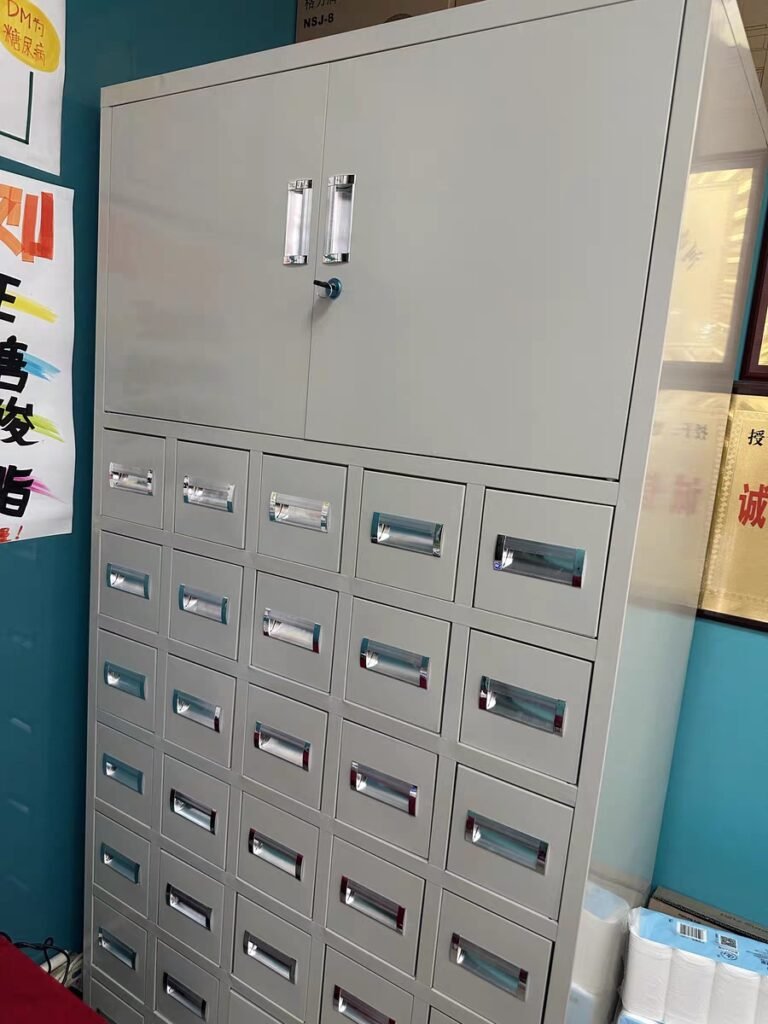
Daily Usage and Maintenance Practices
In actual operations in Chinatown, Chinese medicine cabinet maintenance tends to be practical:
- Using soft dry or slightly damp cloths to clean cabinet surfaces
- Regularly checking if drawer slides operate smoothly
- Controlling the amount of herbs loaded in individual drawers to avoid overloading
- Keeping herb drawer labels clear for multi-person collaboration
These practices help maintain long-term stable use of Chinese medicine cabinets and align with the daily work rhythm of local TCM clinics.
Common Chinese Terminology for Chinese Medicine Cabinets in New York
In the New York area, especially Manhattan’s Chinatown, the following Chinese terms are commonly used in daily communication and materials:
- (Chinese medicine cabinet)
- (Steel Chinese medicine cabinet)
- (Herb drawer cabinet)
- (Medicinal herb storage cabinet)
- (TCM clinic Chinese medicine cabinet)
- (Chinese medicine pharmacy cabinet)
These terms primarily focus on function and usage scenarios, facilitating communication and understanding.
Conclusion
In Manhattan’s Chinatown, New York, Chinese medicine cabinets are not merely storage furniture but important infrastructure for the daily operations of Traditional Chinese Medicine. Steel Chinese medicine cabinets, through their structural stability, multi-drawer classification, moisture-proof and insect-proof features, adapt to the practical needs of local TCM clinics and Chinese medicine pharmacies.
For institutions long engaged in TCM services, rational medicinal herb storage methods help improve work efficiency, ensure herb quality, and also reflect the continuous development and localization practices of Traditional Chinese Medicine in overseas environments.