
Knock-Down Steel Filing Cabinet — Flat-Pack Loading and the Container Math Importers Miss
Importers do not buy filing cabinets. They buy space on a ship, and the cabinet is what happens to be inside it. That is why two suppliers can quote the same cabinet at the same unit price and land it at very different costs — one ships a steel box full of air, the other ships flat panels and a bag of fasteners.
Flat-pack is usually described as a way to save money. It is really a volume decision, and the volume is where the money is. A cabinet that travels knocked down can put several times more units behind the same container doors.
This guide is the arithmetic: what each container really holds, what to ask for before you book, and what flat-pack costs you at the other end.
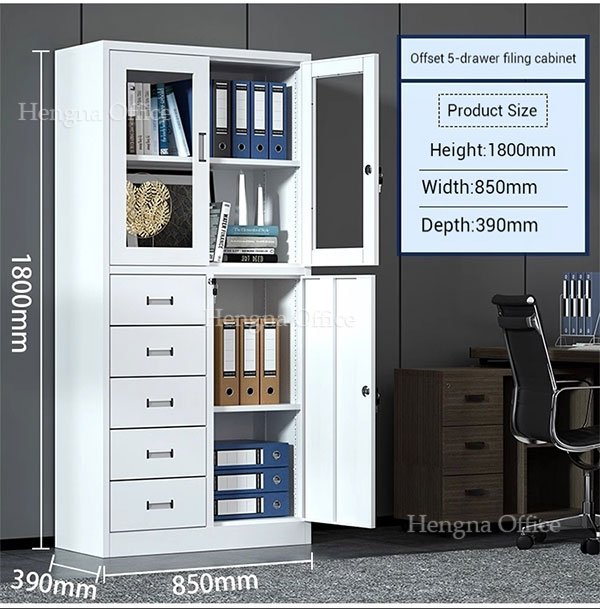
What flat-pack actually changes
An assembled cabinet is a rigid box enclosing air. You pay freight on the outside dimensions and the air travels free of charge — except you paid for it. Knocked down, the same cabinet becomes a bundle of flat panels, a set of shelves, and a hardware bag, and the volume collapses to roughly the thickness of the steel plus the packing.
What moves is the assembly step. It leaves the factory and reappears at the destination, where someone has to do it. That is the whole trade, and every flat-pack decision comes back to it.
The container numbers worth knowing by heart
| Container | Internal volume | Practical fill, loose cartons | Max payload |
|---|---|---|---|
| 20ft GP | About 33 CBM | 27–30 CBM | About 21.5 t |
| 40ft GP | About 67 CBM | 56–58 CBM | About 26.5 t |
| 40ft High Cube | About 76 CBM | 64–67 CBM | About 26 t |
The gap between the two volume columns is the part that catches people out. Theoretical volume assumes the box is filled perfectly, and it never is. Cartons do not tessellate, pallets eat five to eight cubic metres on their own, and irregular bundles can waste more than ten percent. A loading crew that knows the product can find three to five cubic metres that a first-timer cannot.
Floor-loaded cartons beat palletised loads on space every time, and cost more labour at the destination. Flat-pack steel furniture is almost always floor-loaded.
The arithmetic to run before you book
- Get the carton dimensions and cartons per unit. Two numbers, and without them the rest is guesswork.
- Work out one carton’s volume — length × width × height in metres. Keep the carton as packed; do not measure the panel inside it.
- Multiply by the units you want, then compare against the practical fill column, not the theoretical one.
- Check the gross weight against the payload. Flat-pack furniture is light for its volume, so the container nearly always runs out of space before it runs out of weight.
- Ask for a loading plan. A supplier who ships these regularly can tell you how many units went in the last container and how they were stacked.
If the answer is “about one 40HQ” with no carton list behind it, that is not an answer. Ask again in numbers.
One sanity check catches most bad loading estimates: divide the container’s practical fill by the number of units quoted, and compare that figure with the volume of a single assembled cabinet. If the space budgeted per unit is anywhere near the assembled volume, nothing has actually been flattened — that is an assembled quote wearing a flat-pack label.
What flat-pack costs at the other end
The freight saving is visible on the invoice. The other side is spread across the destination warehouse: assembly labour per unit, a hardware kit that has to be complete, an instruction sheet in a language the installer reads, and transit damage. Flat panels flex, and a corner that takes a hit in a loose-stacked container arrives bruised, so edge protection is not a detail.
Assembly time is the number to ask for first, because it decides whether flat-pack is a saving or an expense. A two-door cabinet and a four-drawer unit are not the same job, and the answer changes again if the destination has no one who has done it before.
None of that argues against flat-pack. It argues for buying it with the destination in mind rather than only the invoice.
Flat or assembled: match the order to the site
| Order looks like | Better choice | Why |
|---|---|---|
| Volume order, long sea leg, low unit value | Knocked down | Volume is the dominant cost and assembly labour is cheap at destination |
| Small order, tight deadline, expensive local labour | Assembled | Freight is a small share, and the cabinets go straight into service |
| Narrow doors, upper floors, no lift | Knocked down | Flat panels go where a rigid cabinet will not |
Packaging decides whether it arrives usable
The container is the easy part. This is where flat-pack shipments are made or lost:
- Moisture film around every panel. A steel panel crossing the equator in a container sweats.
- Corner protectors on the outer cartons. The corners take the impact, and a dented panel shows on the front of the finished cabinet.
- Parts packed separately, not loose. Panels, shelves and the hardware bag each have their own place, so the count matches the packing list at the destination.
- The hardware bag fixed to the largest panel. A loose bag is a missing bag, and a missing bag means an assembled cabinet with a door that will not hang.
How these cabinets are built
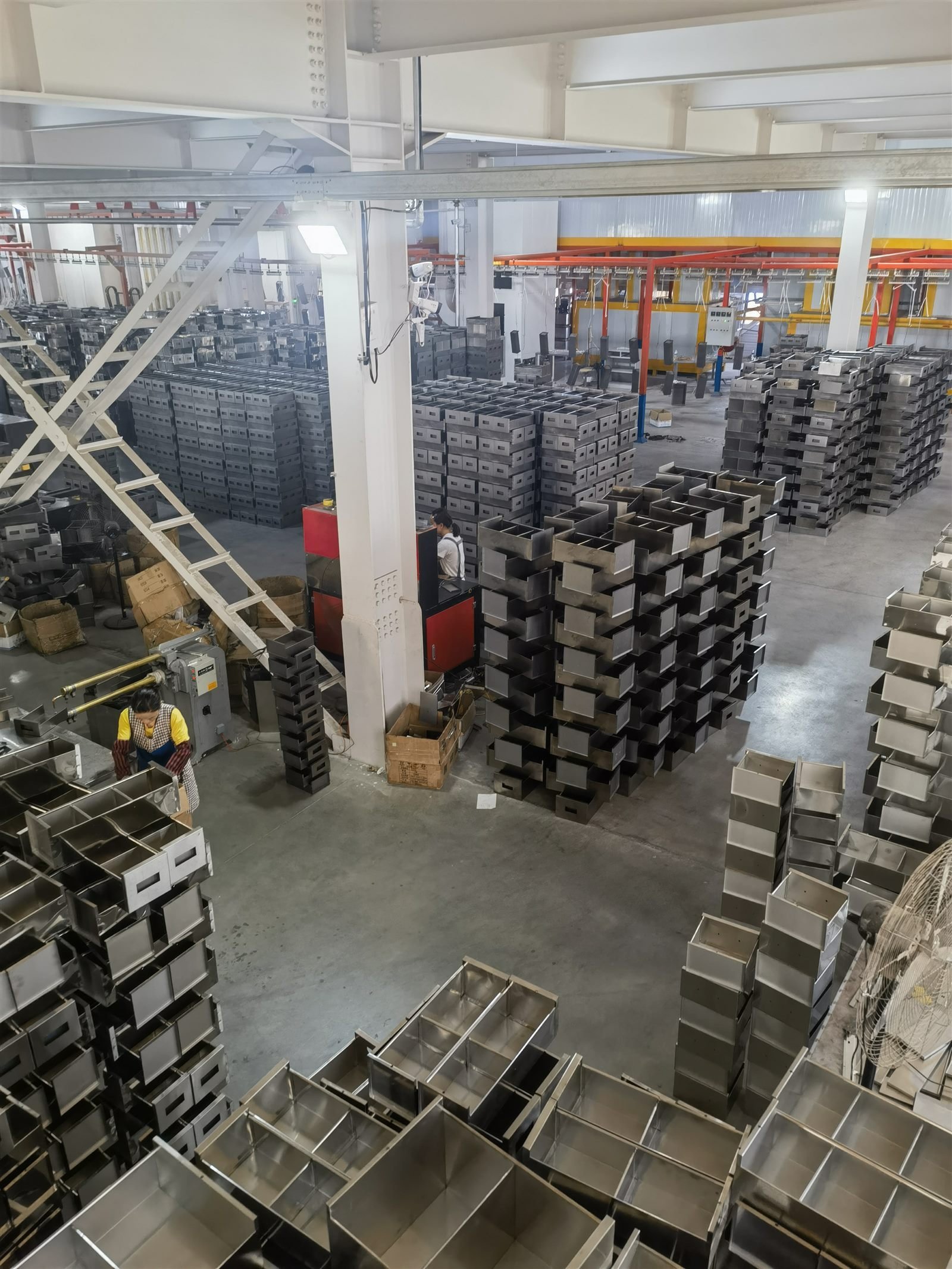
The filing cabinets run on the same steel line in Luoyang as the rest of our storage range. The knock-down range covers 19 models in three finishes — grey-white, coffee-white and pure white — and the panel thickness is made to order rather than fixed. Units ship knocked down with the parts separated, and assemble with hand tools at the destination.
Common questions
How many knocked-down filing cabinets fit in a 40HQ? It depends on the carton size and the model, which is why we send the carton list and the loading quantity with the quote. Multiply it out yourself before you book.
Is flat-pack always cheaper? The freight is. Whether the total is lower depends on what assembly costs where the container lands.
Do knocked-down cabinets feel less rigid? A knock-down cabinet is as rigid as its joint. Check how the panels lock together — a proper knock-down joint pulls the panels into a box, not just against each other.
Can you mix models in one container? Yes. Mixed loading is normal on a first order, and it lets a buyer test several models without paying for a full container of each.
What is the lead time? It depends on the finish and the model mix; send the list and we will confirm against the next production slot.
The short version
Flat-pack is a volume decision, not a price trick. Learn the practical fill of the three common containers, get the carton dimensions and cartons per unit before you book, and multiply it out yourself. Then weigh the saving against assembly labour at the destination — and check the packaging, because a bruised panel costs more than the space it saved.
Send the model list, the quantity and the destination port, and we will come back with the carton list, the loading quantity and a quote within 24 hours.
ESD Workbench Setup — Grounding and Surface Resistance Checks Before Your First Shift
A bench is only an ESD bench when three things check out: the worktop dissipates static,...
Read articleBoltless Steel Shelving Guide — Beam Pitch, Deck Type and How Load Ratings Actually Add Up
Boltless shelving is held together with keyhole slots and snap-in beams. There is no bolt, no...
Read articleMobile Tool Cart Guide — Casters, Ball-Bearing Slides and the Parts That Give Out First
A tool cart and a tool cabinet do not fail in the same order. Put a...
Read article