
Heavy-Duty Storage Rack Buyer Guide: Load Ratings and Deck Types That Fail in Year 2
A warehouse manager orders a rack system based on the beam rating on the spec sheet. The beams are rated for 2,000 kilograms per pair, and the manager loads them to 1,800 kilograms, well within the rating. Six months later the beams start to sag. The problem is not the beam rating: it is the deck type. The wire mesh deck the factory supplied was rated for 1,200 kilograms, not 2,000, and nobody checked the deck rating against the beam rating because the spec sheet listed them on different pages.
This guide covers the three specs that cause rack failures in the first two years: beam load rating, deck type and rating, and the connection system that holds the beam to the upright. These are the details that separate a rack system that lasts ten years from one that needs a rebuild in two.
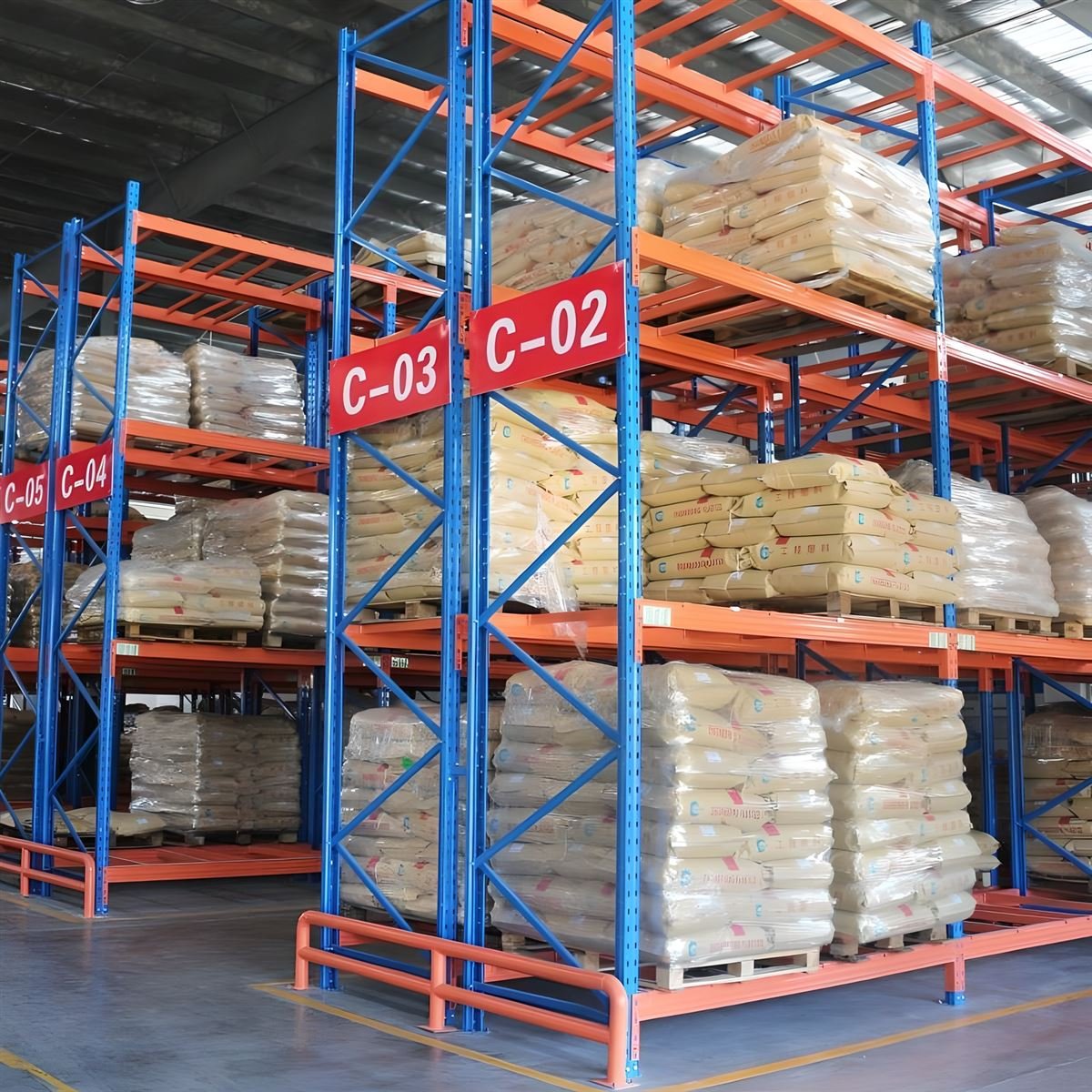
Beam load rating: what the number actually means
A beam rated for 2,000 kilograms per pair means two beams together hold 2,000 kilograms evenly distributed across the beam span. The number does not mean one beam holds 2,000 kilograms, and it does not mean a single point load of 2,000 kilograms concentrated in the center of the beam. The difference between distributed load and point load is the detail that collapses a rack.
A pallet that sits on two beams with the weight evenly spread across the pallet width is a distributed load. A pallet that has a heavy item stacked on one corner is a point load. The point load can be two to three times the stress on the beam at the load point compared to the same weight distributed evenly. When the warehouse operator stacks uneven loads, the beam rating needs to be higher than the total pallet weight to handle the point load concentration.
| Spec | What it means | What to check |
|---|---|---|
| Beam rating (per pair) | Two beams together, evenly distributed | Is the rating for distributed or point load? |
| Deck rating | Weight the deck surface holds between beams | Does the deck rating match the beam rating? |
| Upright capacity | Total load per upright column | Is it per bay or per single upright? |
| Connection type | How beam clips to upright | Teardrop, bolted, or slotted? Each has different strength |
Deck types: wire mesh, particle board, and steel panel
The deck is the surface that sits between the beams and holds the actual load. Wire mesh is the most common because it is lightweight, allows sprinkler water to pass through, and costs the least. The problem is that wire mesh decks have their own load rating that is often lower than the beam rating, and the spec sheet does not always make that clear.
Particle board decks are cheaper than steel but they absorb moisture and sag over time, especially in warehouses without climate control. Steel panel decks are the strongest and the most expensive, and they are the only deck type that matches the beam rating in all load configurations. For warehouses that store heavy items or uneven loads, steel panel decks are the safe choice.
Connection systems: teardrop, bolted, and slotted
The connection between the beam and the upright is the joint that holds the entire rack together. A teardrop connection uses a hook on the beam end that drops into a teardrop-shaped hole on the upright. It is the fastest to assemble because it requires no bolts, and it is the standard for most pallet rack systems in North America and Europe.
A bolted connection uses a bracket and bolts to fix the beam to the upright. It is stronger than a teardrop but slower to assemble and adjust. For seismic zones or warehouses with forklift traffic that may bump the rack, a bolted connection is the safer choice because it does not release under side impact.
A slotted connection is the oldest type and the weakest. The beam sits in a slot on the upright and relies on gravity to stay in place. It is still used in some budget rack systems but it is not recommended for heavy loads or warehouses with forklift traffic.
How we build ours
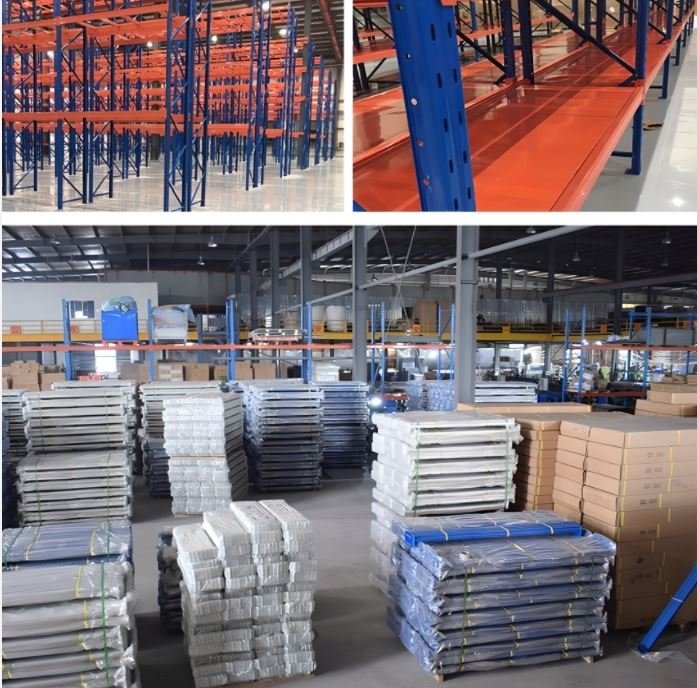
Our storage racks are manufactured in Luoyang with cold-rolled steel uprights and hot-rolled steel beams. The connection system is teardrop as standard, with bolted connections available as a factory option for seismic zones. Deck options include wire mesh, particle board, and steel panel, and we include the deck load rating on the same spec sheet as the beam rating so the buyer can verify the match before ordering.
Custom configurations are standard: bay width, beam height, number of levels, and deck type. We also offer a seismic calculation report for buyers in earthquake zones, prepared by a structural engineer and stamped for the destination market. Send the warehouse dimensions and the load profile, and we will return the rack layout with the quote.
Seismic considerations for earthquake zones
Warehouses in earthquake zones need rack systems that can handle lateral forces, not just vertical loads. A standard teardrop connection releases under side impact, which means the beams can pop off the uprights during an earthquake and the entire rack collapses. The fix is a seismic-rated connection that locks the beam to the upright with a safety pin or a bolted bracket that prevents release under lateral movement.
We offer seismic calculations for every market that requires them, prepared by a structural engineer and stamped for the destination jurisdiction. The calculation covers the rack height, the load per level, the seismic zone, and the soil type. For buyers in California, Japan, Turkey, and other high-seismic markets, the calculation report is a required document for the building permit, and we include it in the shipment documentation.
Common questions
How do I calculate the total rack capacity for a bay? Multiply the beam pair rating by the number of beam levels, then check that the total does not exceed the upright capacity per bay. The upright capacity is the limiting factor: a four-level rack with 2,000-kilogram beams per level needs uprights rated for at least 8,000 kilograms per bay.
Can the beam height be adjusted after installation? Yes. Teardrop and bolted connections both allow beam height adjustment without tools (teardrop) or with a wrench (bolted). The adjustment increment is typically 50 to 75 millimeters, which matches most pallet height variations.
Do you offer a rack inspection service? We provide an inspection checklist with every shipment that covers beam deflection, upright alignment, connection tightness, and deck condition. For buyers who want a professional inspection, we partner with rack inspection firms in several markets and can arrange a visit.
What is the lead time for a full warehouse layout? Standard configurations ship in 20 to 25 days. Custom configurations with seismic calculations or special deck types take 30 to 40 days.
Can the rack be used in cold storage? Yes. We offer a cold-storage-rated powder coat that withstands temperatures down to minus 30 degrees Celsius without cracking. The wire mesh deck option is recommended for cold storage because it allows air circulation and prevents ice buildup on the deck surface.
Can the rack be expanded after the initial installation? Yes. Teardrop and bolted rack systems are modular by design. Add bays to the end of a row by connecting new uprights to the existing row with splices. Add beam levels by inserting new beams into the existing uprights at the desired height. We include expansion splices in every initial shipment so the warehouse manager can add capacity without ordering a new rack system.
The short version
Match the deck rating to the beam rating, choose the connection type for the traffic environment, and check the upright capacity against the total bay load. Three specs that decide whether a rack system lasts ten years or fails in two. Send us the warehouse dimensions and the load profile, and we will return the rack layout with the quote.
Boltless Steel Shelving Guide — Beam Pitch, Deck Type and How Load Ratings Actually Add Up
Boltless shelving is held together with keyhole slots and snap-in beams. There is no bolt, no...
Read articleMobile Tool Cart Guide — Casters, Ball-Bearing Slides and the Parts That Give Out First
A tool cart and a tool cabinet do not fail in the same order. Put a...
Read articleFlammable Storage Cabinet Venting — When Ducting Is Required and When to Leave Bungs In
Most flammable storage cabinets should stay sealed. NFPA 30 does not require venting for fire protection,...
Read article