
Pathology Storage Room Setup: Wax Blocks, Slides, and Records in One Organized System
A pathology storage room is a library with a deadline. The wax blocks, the slides, and the paper records all have retention periods that run into decades, and the room has to keep them findable for the entire run. When a hospital builds a new wing and the storage room has to move, or when a lab doubles its caseload in three years, the storage system either handles it or it does not.
This guide is written for the pathology manager who is planning a new room or reorganizing an old one, with the three specimen types side by side and enough breathing room for the next ten years.
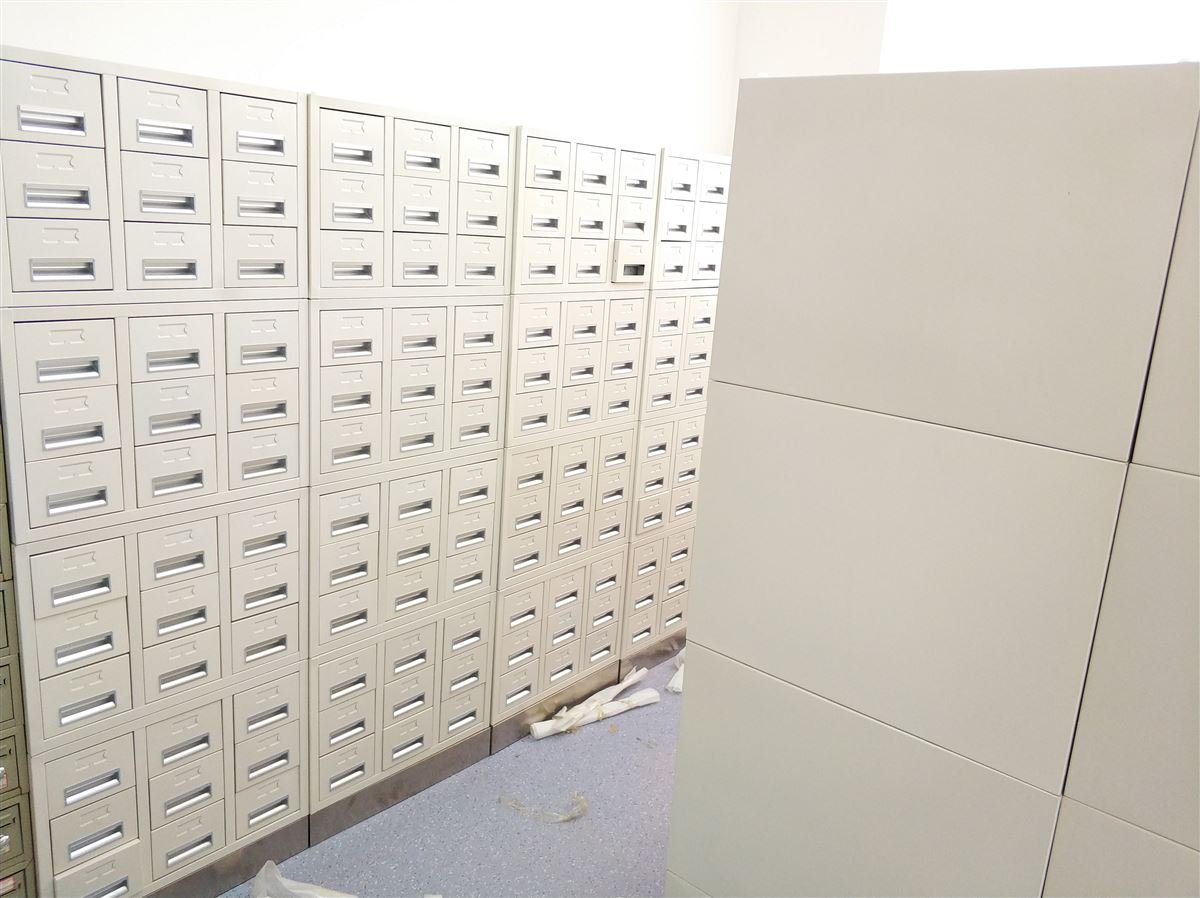
Why three cabinet types, not one universal cabinet
Wax blocks, glass slides, and paper records are three different sizes, three different weights, and three different retention rules. A wax block is small and heavy for its size, a glass slide is fragile and needs a label that faces forward, and a paper record is flat and accumulates bulk over years. Trying to store all three in the same drawer is like trying to use the same shelf for wine bottles, glasses, and corks: technically possible, practically a mess.
The three-cabinet approach keeps each specimen type in its own format and its own retrieval logic. The wax block cabinet has shallow drawers with cell dividers that hold blocks upright so the tissue face is visible. The slide cabinet has shallow trays with card holders so the case label faces forward. The record cabinet has deep drawers or file slots for the A4 binders and the flat folders that accumulate year after year.
| Specimen type | Cabinet format | Key feature |
|---|---|---|
| Wax blocks | Shallow drawers with cell dividers | Blocks stored upright, tissue face visible |
| Glass slides | Shallow trays with card holders | Labels face forward, slides protected from contact |
| Paper records | Deep drawers or file slots | A4 binders and folders stored flat |
How much storage a lab actually needs: the retention math
The retention period for wax blocks and slides runs from ten years to indefinitely depending on jurisdiction, and the paper records follow the same timeline. Most labs plan for ten years of accumulation before a major reorganization or archive move. The question is: how many cases per year, and how many specimens per case.
A typical surgical pathology case produces one to three wax blocks and two to five slides. A mid-size hospital lab processing 5,000 surgical cases per year accumulates roughly 10,000 to 15,000 wax blocks and 15,000 to 25,000 slides per year. Over ten years, that is 100,000 to 150,000 wax blocks and 150,000 to 250,000 slides. At that volume the cabinet count matters more than the drawer count, because the room itself becomes the limiting factor.
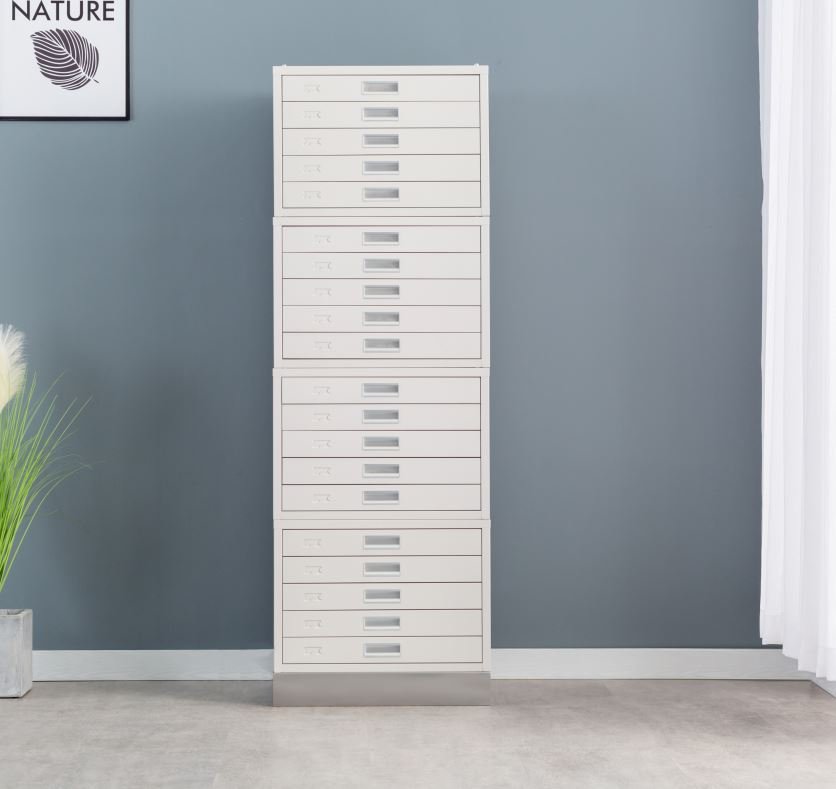
Room layout: the zones that keep the workflow moving
A pathology storage room has three functional zones: receiving, active storage, and archive. The receiving zone is near the door, where new specimens arrive and get assigned a drawer. The active storage zone holds the current year and the previous four years, and it is the zone the pathologist walks to most often. The archive zone holds everything older than five years, and it lives at the back of the room or on a mezzanine if the ceiling height allows.
The aisle width between cabinet rows is the detail that decides whether the room works for one person or two. A single-person aisle runs 800 to 900 mm. A two-person aisle needs 1200 mm so one person can pass while the other is pulling a drawer. Wider than 1200 mm wastes floor space in a room that rarely has any to spare.
Label systems: the part that makes retrieval possible
Every drawer in a pathology storage room has a label that tells the pathologist what is inside without opening it. The label system for wax blocks is usually case number plus year. The label system for slides is case number, stain type, and block number. The label system for records is case number and year, filed in date order.
The label holder is the part that fails first. A plastic sleeve that yellows in two years or a paper label that falls out of a clip is a retrieval failure waiting to happen. We use metal label holders with clear windows and replaceable inserts, and we include spare inserts in the shipment so the lab can reprint labels when case numbering systems change.
How we build ours
Our pathology cabinets come off the same steel furniture line in Luoyang as our laboratory and pharmacy equipment. The drawers run on ball-bearing slides rated for the weight of a full load of wax blocks, and the dividers are removable so the lab can reconfigure drawer layouts as specimen types and sizes change over the retention period.
Custom features are routine: drawer depth for unusual specimen sizes, lockable sections for medicolegal cases, and integrated label printers for labs that have moved to barcode tracking. Send the specimen list and the room dimensions, and we will return the cabinet plan with the quote.
Color coding and retrieval speed
A pathology storage room that uses one color of drawer front for all three specimen types makes the pathologist read every label on the row. A color-coded system fixes that: one color for wax blocks, another for slides, and a third for records. The color does not replace the label, but it shortens the search to the correct cabinet before the label is even read. Over a ten-year period with tens of thousands of drawers, that speed difference adds up to real time savings in a department where pathologists are always short of it.
We powder coat each cabinet type to the lab color specification at the factory, and we include color samples in the quote package so the choice is made on real metal, not on a screen swatch. The most common pairing is warm tones for wax block cabinets, cool tones for slides, and neutral tones for records, but the final call is always the lab manager.
Common questions
Can wax blocks, slides, and records go in the same room? Yes, and they should, because the pathologist retrieves all three together when reviewing a case. The three cabinet types keep the specimens organized without mixing formats, and the room layout zones the retrieval by frequency rather than by specimen type.
How often do cabinets need to be reorganized? An annual check of label condition and drawer occupancy is enough for most labs. A major reorganization, where archive cabinets are compacted or moved to a secondary room, happens every five to ten years depending on caseload growth.
What happens when the retention period expires? The specimens are disposed of according to local regulations, the drawers are emptied, the labels are cleared, and the drawer is returned to active use. Planning for turnover is part of the retention math, because a cabinet that is never emptied eventually stops being storage and becomes a monument.
Do you offer mobile or compact shelving for storage rooms? Yes. High-density mobile shelving systems are available for labs where floor space is the main constraint. These systems double the storage density by eliminating fixed aisles, and we design the rail layout to suit the room dimensions.
Can the cabinets be sterilized between specimens? The steel body and powder-coated drawers wipe down with standard lab disinfectants. For labs handling infectious specimens, we offer stainless steel interiors as an upgrade at the quote stage.
How do we plan for caseload growth over ten years? Build 20 percent more drawer space than the current year requires, and place the extra capacity in the archive zone so the active zone stays compact and easy to walk. When the active zone fills, the overflow slides into the pre-built archive space without a room reorganization.
The short version
Three cabinet types for three specimen formats, ten-year retention math to size the room, active and archive zones to keep retrieval fast, and a label system that survives the same decade as the specimens. Send the caseload number and the room plan, and we will return the cabinet layout with the quote.
Flammable Storage Cabinet Venting — When Ducting Is Required and When to Leave Bungs In
Most flammable storage cabinets should stay sealed. NFPA 30 does not require venting for fire protection,...
Read articlePhone Charging Locker Specs — Bay Count, Power Draw and Lock Type Buyers Must Pin Down First
Three specs decide whether a container of phone charging lockers sells through or comes back as...
Read articleSteel Filing Cabinet Mistakes: 5 Specs That Ruin Office Storage Before the First Audit
Five filing cabinet specs that ruin office storage: slide ratings, lock type, drawer depth, coat thickness, and anti-tip design.
Read article