
Locker Room Upgrade: Before vs After Steel Wardrobe Lockers for Gyms and Staff Areas
Locker Room Upgrade: Before vs After Steel Wardrobe Lockers for Gyms and Staff Areas
Locker Room Upgrade: Before vs After Steel Wardrobe Lockers for Gyms and Staff Areas
A gym manager replaces the old wooden lockers with steel wardrobe lockers and the complaints drop to zero in the first month. Not because the new lockers look better, but because the three problems that drove every complaint — rusted hinges, warped doors, and broken locks — are engineered out of the steel design. This guide walks through the before-and-after comparison and the specs that decide whether a locker room upgrade actually solves the problems or just moves them to a different material.
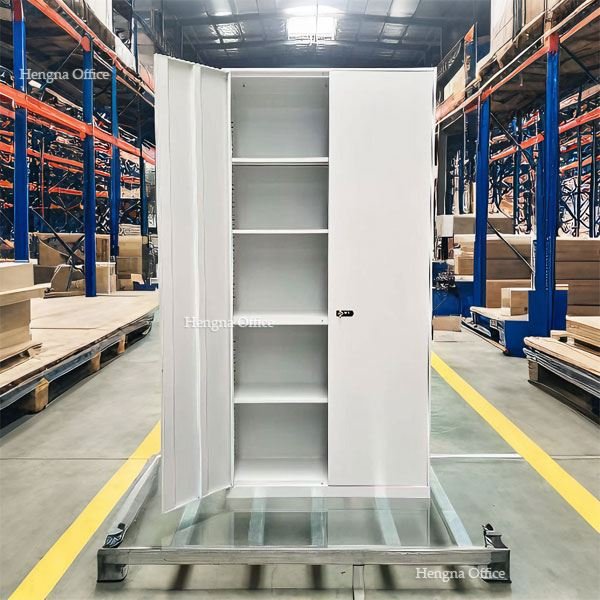
Before: the three problems that kill old lockers
Wooden and laminate lockers in a gym or pool environment absorb moisture from wet towels, swimwear, and humid air. Within six months the panels swell, the doors stop closing flat, and the hinges rust to the point where they snap when forced. The locker room starts to smell because the damp panels breed mold inside the compartments.
Locks are the second failure point. Cheap cam locks wear out after a few hundred cycles, and the key gets stuck or snaps off in the cylinder. In a gym with 200 members using the lockers daily, a broken lock every week becomes a maintenance ticket that the facilities team cannot keep up with.
The third problem is ventilation. A locker without ventilation slots traps moisture inside, and the next user opens the door to a musty smell. In staff changing rooms where employees store work clothes for eight hours, the trapped moisture damages fabric and creates a hygiene issue that HR gets involved in.
After: how steel solves all three
Steel does not absorb moisture. A powder-coated steel panel sits in a humid locker room for five years without swelling, warping, or growing mold. The surface wipes clean with a damp cloth, and the powder coat resists the chlorine and salt that pool and spa environments throw at it.
Steel hinges are welded to the frame, not screwed into a wooden panel. A welded hinge does not loosen over time, and the door alignment stays consistent for the life of the locker. The hinge pin is a 6-millimeter steel rod that does not rust because it is zinc-plated as a separate process before assembly.
Ventilation slots are punched into the door and the back panel at the factory. The slots are sized to allow airflow without compromising privacy, and they are positioned at the top and bottom of each compartment to create a convection current that dries wet items within two to three hours.
| Problem | Old locker (wood/laminate) | New locker (steel) |
|---|---|---|
| Moisture damage | Swells, warps, molds | No absorption, wipes clean |
| Hinge failure | Rusts, loosens, snaps | Welded, zinc-plated, permanent |
| Lock wear | Cam lock, 500-cycle life | Heavy-duty cam or padlock hasp, 5,000+ cycles |
| Ventilation | None or drilled after install | Factory-punched, top and bottom |
| Lifespan | 2-3 years | 10+ years |
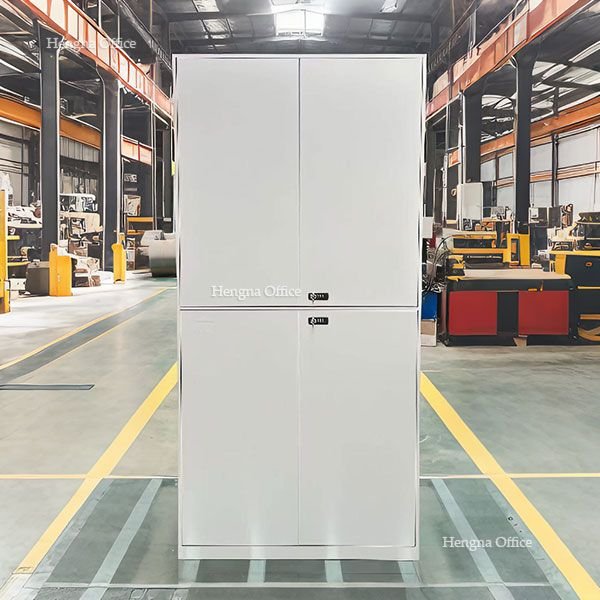
The six-month mark: what to check
A locker room upgrade is not finished when the lockers are installed. The six-month check is the real test: are the doors still aligned, do the locks still turn smoothly, and is there any rust at the weld points? A well-built steel locker passes the six-month check with zero issues. A budget steel locker with thin panels and cheap locks starts showing problems at the six-month mark that mirror the old wooden lockers.
The panel thickness is the spec that matters most at the six-month mark. A 0.6-millimeter steel panel dents when a user slams the door or kicks the base in frustration. A 0.8-millimeter panel handles the same abuse without visible damage. The difference is 0.2 millimeters and a few dollars per unit, but it decides whether the lockers look new after six months or look like they have been in a warehouse for ten years.
How we build ours
Our steel wardrobe lockers are manufactured in Luoyang with 0.8-millimeter cold-rolled steel panels, welded hinges with zinc-plated pins, and heavy-duty cam locks rated for 5,000 cycles. Ventilation slots are punched into the door and back panel at the factory, and the powder coat is a 60-micron layer rated for humid environments.
Custom options include door configuration (single, double, or six-compartment), lock type (cam, padlock hasp, or digital), color, and a sloped top that prevents users from stacking items on top of the locker. Send the room dimensions and the user count, and we will return the locker layout with the quote.
Common questions
Can the lockers be used in a pool changing room? Yes. Our lockers are rated for high-humidity environments. The powder coat resists chlorine and salt, and the ventilation slots prevent moisture buildup inside the compartments. For pool environments, we recommend the stainless steel hinge option as a factory upgrade.
Do you offer a bench that matches the lockers? Yes. We offer a steel-framed bench with a hardwood or steel slat seat that is designed to fit between the locker rows. The bench ships as a separate unit and is anchored to the floor at installation.
What is the lead time for a full locker room? Standard configurations ship in 20 to 25 days. Custom configurations with digital locks or stainless steel hinges take 30 to 35 days. We include installation hardware and a layout diagram in every shipment.
Can the locker doors be reversed? Yes. Our locker doors are designed to be hinged on either side. The hinge plates are pre-drilled for both left-hand and right-hand opening, and the door can be flipped during installation without any modification.
What is the warranty? The steel body carries a 10-year warranty against structural failure. The lock mechanism carries a 3-year warranty. The powder coat carries a 5-year warranty against peeling and fading under normal indoor use.
The short version
Steel replaces wood, welded hinges replace screwed hinges, factory-punched ventilation replaces no ventilation, and 0.8-millimeter panels replace 0.6-millimeter panels. Four changes that turn a locker room from a maintenance burden into a zero-complaint zone. Send us the room dimensions and the user count, and we will return the locker layout with the quote.
Heavy-Duty Tool Cabinet Buyer Checklist
Drawer slides, welds, locks, coating, and packaging.
Heavy-Duty Tool Cabinet Buyer Checklist
Drawer slides, welds, locks, coating, and packaging.