
Lockable Cleaning Cabinets for Schools and Care Homes: Chemical Control That Passes Inspection
A cleaning chemical in an unlocked closet in a school is a one-report incident. A cleaning chemical in an unlocked closet in a care home is a compliance failure that stops at the manager desk. The lock is not a convenience feature in these buildings: it is the thing that makes the chemical storage legal, and the cabinet that holds the chemicals needs to be built around the lock, not as an afterthought.
Here is how to choose a lockable cleaning cabinet that passes the inspections schools and care homes actually face, without turning the cleaning cupboard into a supply room that nobody can access during a shift.
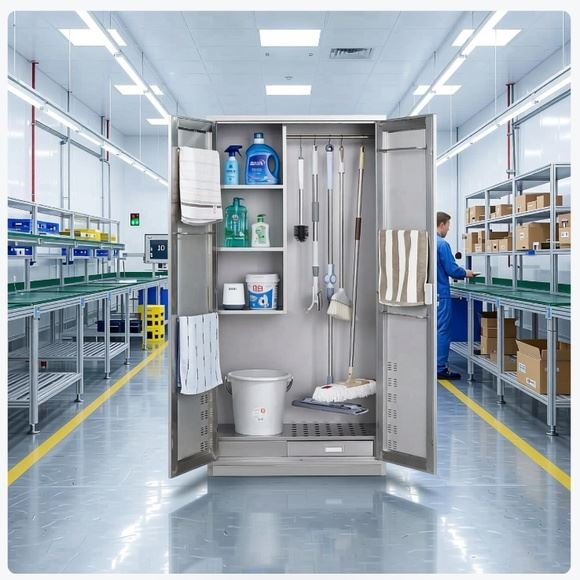
What the inspector is checking
Inspectors in schools, care homes, and regulated food facilities look at three things when they open a cleaning cupboard: are the chemicals locked, are they separated from other stock, and is there a record of who has access. The cabinet answers the first two. The third is a keying and management question that lives outside the cabinet but must be planned with it.
The lock itself must be a keyed lock or a combination lock that the cleaning supervisor controls. A latch that anyone can open is not a lock in the eyes of an inspector, and a sliding bolt on a door that has been left open is as good as no lock at all. For care homes and schools, the standard expectation is a lock that holds the chemical compartment sealed and requires a specific key or code to access.
| Inspection point | What passes | What fails |
|---|---|---|
| Chemical separation | Lockable compartment, separate from mops and cloths | Chemicals on an open shelf next to cleaning tools |
| Access control | Keyed lock or code lock, supervisor-controlled | Latch, hook-and-eye, or open door |
| Record of access | Key sign-out log or code holder list | Shared key on a hook by the door |
The split-layout cabinet: locked section and open section in one body
A cleaning cupboard that locks entirely means the mop and the broom are also locked away, and the cleaner has to open the cabinet every time the shift starts. That works for small buildings. In schools and care homes where the cleaning closet is opened twenty times a day, a full-lock cabinet becomes a bottleneck and the lock gets left off.
The solution is a split layout: a lockable compartment on one side for chemicals, and an open section on the other side for mops, brooms, and cloths. The cleaner reaches the tools freely, and the chemicals stay behind a lock that only the supervisor opens for refills. We build both: full-lock single-body cabinets for small rooms and split layouts for the main cleaning closets that serve an entire floor.
Keying plans for multi-room buildings
A school with ten cleaning closets does not need ten different keys. A master-keyed system lets the facilities manager open every closet with one key while each individual closet has its own key for the cleaners assigned to that floor. The same system works in care homes and multi-site operations, and it is ordered at the quote stage because the locks are fitted at the factory, not on site.
Tell us the building layout and the keying plan when you request the quote, and we will return a lock schedule showing which lock goes where and which key opens which. A shared-key system across the building saves the facilities manager a drawer full of mystery keys and a monthly lost-key problem that never goes away.
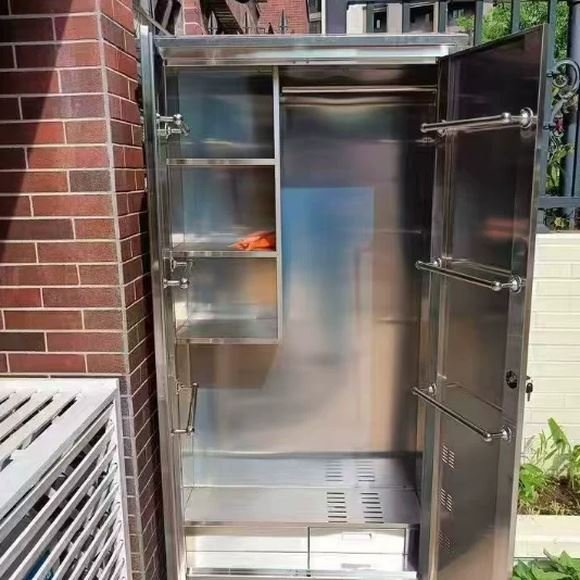
Material and finish: what regulators expect
For food-service areas and medical cleaning closets, the cabinet body is stainless steel and the finish is a smooth powder coat or a polished surface that wipes down without trapping residue. For general school and office cleaning closets, powder-coated steel is the standard and it passes in every jurisdiction we have shipped to.
The floor of the chemical compartment is the detail that matters most: a raised lip or a spill tray catches leaks before they reach the mop section or the floor. In care homes and hospitals, that tray is a required feature in several cleaning audit standards. We build the tray as a removable insert so it can be cleaned and reinstalled without tools.
Ventilation and the locked door
A locked cabinet that holds bleach and floor stripper needs air. If the chemical compartment is fully sealed, the fumes build up when the door is closed and the cleaner gets a face full of vapor when it opens. The fix is ventilation panels built into the door or the back wall of the chemical compartment, high enough that the fumes vent out without allowing spills to reach the vents.
For schools and care homes in warm climates, we recommend vented doors on both the chemical compartment and the tool section, because the mop side dries faster with airflow and the chemical side vents fumes. In cold climates where the cleaning closet is inside a heated corridor, a passive vent at the top of the door is enough.
Sign-out logs and the reality of shared keys
A shared key that hangs on a hook by the cleaning closet door is a lock that anyone can open. The log that sits next to it, with a pen that has been missing since last Tuesday, is a record that does not exist in practice. The fix is boring and effective: a sign-out sheet that lives at the cleaning supervisor desk, not at the closet, and a key that comes back to the desk at the end of every shift.
For schools that run cleaning staff across multiple buildings, we offer a key cabinet as an add-on: a small wall-mounted box with numbered hooks and a master lock that the facilities manager controls. Each cleaner takes the key for their zone and signs it out on the sheet inside the box. At the end of the shift the key comes back. The system costs almost nothing, and the next inspection goes from a problem to a line item that the inspector signs off on.
Common questions
Can the lock be changed if a key is lost? Yes. The lock cylinders on our cabinets are replaceable as a field part. We include a spare cylinder in every shipment, and a facilities manager with a screwdriver can swap the lock in ten minutes without removing the door.
Do you offer combination locks instead of keyed locks? Yes. Combination locks are available as a factory-fit option at the quote stage. Some facilities prefer them because there are no keys to lose, and the code can be changed when staff changes.
How many chemicals fit in the lockable compartment? Standard lockable compartments hold between 8 and 15 liters of cleaning chemicals depending on cabinet width. For facilities with larger chemical stores, we build wider chemical compartments or add an under-counter lockable unit.
Can the tool section be locked too? Yes. Full-lock cabinets are our standard for buildings where the cleaning closet is in a public corridor and the tools themselves are a theft risk. Tell us the building context and we will recommend the right layout.
Do you provide a compliance sheet for the inspector? We provide a product specification sheet that lists the lock type, the material grade, the ventilation method, and the spill tray feature. The sheet is formatted for a facilities manager to hand to an inspector, and it arrives in the same shipment as the cabinet.
Can the cabinet be wall-mounted in a narrow corridor? Yes. Wall-mounted models are available for buildings where the floor space is not wide enough for a freestanding unit. Check the wall load with the building engineer, because a loaded cabinet with chemical bottles is heavier than it looks, and we include wall anchor points on every wall-mount model.
The short version
Lock the chemicals, separate them from the tools, keep the air moving, and plan the keying before the quote. A split-layout cabinet with a keyed lock, a removable spill tray, and a ventilation door is the cabinet that passes inspections and stays locked in practice. Send us the building plan and the keying requirement, and we will return the lock schedule with the quote.
Mobile Tool Cart Guide — Casters, Ball-Bearing Slides and the Parts That Give Out First
A tool cart and a tool cabinet do not fail in the same order. Put a...
Read articleFlammable Storage Cabinet Venting — When Ducting Is Required and When to Leave Bungs In
Most flammable storage cabinets should stay sealed. NFPA 30 does not require venting for fire protection,...
Read articlePhone Charging Locker Specs — Bay Count, Power Draw and Lock Type Buyers Must Pin Down First
Three specs decide whether a container of phone charging lockers sells through or comes back as...
Read article