
How to Choose a Laboratory Explosion-Proof Cabinet: Material, Capacity, Shelves, and Doors
How to Choose a Laboratory Explosion-Proof Cabinet: Material, Capacity, Shelves, and Doors
The most dangerous thing in a lab is not the experiment itself. It is the bottle of solvent someone put in an ordinary steel cabinet and forgot about.
A single misplaced chemical, one spark, and the whole laboratory pays the price. That is why explosion-proof cabinets exist, and why choosing one deserves more than a quick online order.
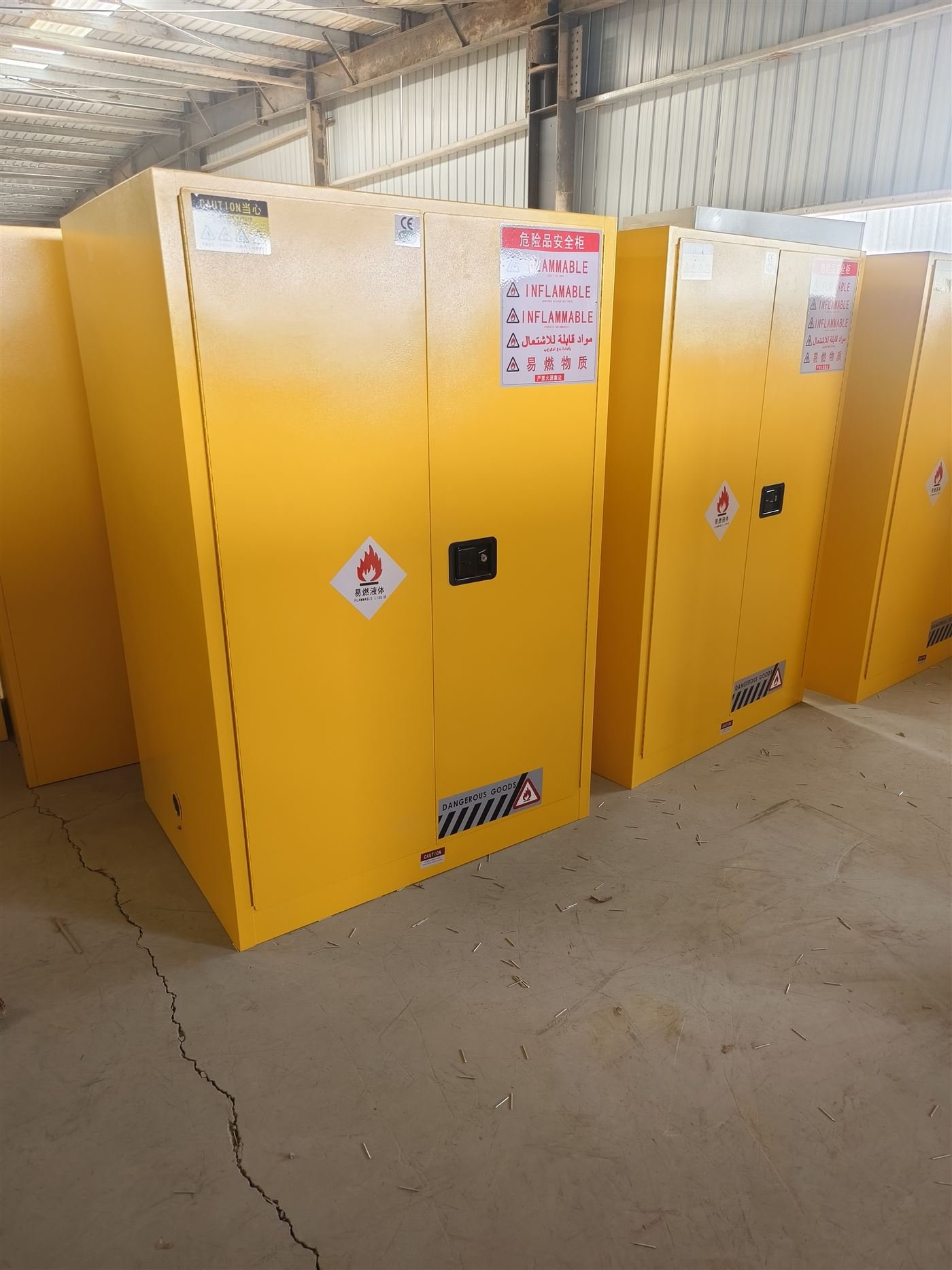
An explosion-proof cabinet is not a normal cabinet painted safety yellow. It is a double-wall cabinet: two steel skins with an air gap between them, so heat takes longer to reach the contents. The base is a spill containment tray. If a bottle breaks, the liquid stays inside instead of running across the floor. The door seals and the vents are designed to keep fire out and guide fumes safely away.
An explosion-proof cabinet vs a regular cabinet
Before spending money, it helps to see exactly what the difference is.
| Feature | Regular steel cabinet | Explosion-proof cabinet |
|---|---|---|
| Body | Single-skin steel | Double-wall steel with an air gap |
| Spill tray | Usually none | Built-in containment tray |
| Door seal | None | Sealed door edges |
| Vents | None | Vented for safe fume release |
| Color coding | Any color | Safety yellow standard |
| Purpose | General storage | Flammable liquid and chemical storage |
A regular cabinet holds office supplies. An explosion-proof cabinet buys you time when something goes wrong, and time is what the fire department needs.
1. Material and construction
The thickness of the steel panels decides how long the cabinet resists heat. We build ours from heavy-gauge cold-rolled steel with a double-wall body, an air gap between the skins, and lined doors. Cheap cabinets use thin sheet. Knock on the door of a cheap cabinet and knock on ours, and you will hear the difference.
When you talk to a supplier, ask three questions: how thick are the panels, is the body double-wall, and do the shelves have reinforcement ribs. If the answers are vague, move on.
2. Capacity: how many gallons do you need
Explosion-proof cabinets are sized in gallons. The common sizes are 12, 22, 30, 45, 60, and 90 gallons. Do not buy big for the sake of it, and do not buy small to save floor space.
The practical way to size a cabinet is simple: count the chemicals you actually store, then multiply by 1.5 for headroom. Running out of space is worse than having a little extra, but an oversized cabinet wastes valuable lab floor area. In our export orders, 30 and 45 gallon models are the most common. They hold enough without taking over the room.
3. Shelves: load and adjustability
Shelves must carry weight and adjust to your bottles. Chemical containers are dense, and a full shelf can easily hold dozens of kilograms. Ask for the rated load per shelf and check whether the shelves adjust vertically.
Our standard cabinets ship with load-bearing shelves and fully welded reinforcement ribs. If a customer stores 5-gallon drums or oversized containers, we build deeper reinforced shelves to order.
4. Door type: manual or self-closing
The difference between a manual door and a self-closing door is a safety grade. Self-closing doors have a fusible link: when the temperature around the cabinet reaches its trigger point, the link melts and the doors shut on their own. The fire gets sealed inside, cut off from oxygen.
In regions with strict fire inspection standards, self-closing doors are a hard requirement. If your buyer is in North America or Europe, go with self-closing from the start. It is not the place to save money.
Choosing by facility type
Different buyers need different configurations, and the cabinet that fits a school lab is not the cabinet a chemical plant should order.
Schools and universities. Teaching labs store small volumes: ethanol, acetone, a few acids. Two or three 12 to 30 gallon cabinets near the prep room usually cover it. Manual doors are generally accepted, but check the local inspection rules first. Color coding matters here because students read labels, not manuals.
Pharmaceutical and research labs. These facilities store more volume and more aggressive chemicals. Buy 45 to 90 gallon units with self-closing doors, and separate acids from flammables instead of mixing everything in one cabinet. Plan for grounding and for a venting route before the cabinet arrives.
Chemical plants and factories. High volume, daily use, and inspectors who look closely. Self-closing doors are the default here, spill trays get tested in real incidents, and the cabinet placement is part of the site safety layout. For these buyers we usually quote multiple units with matching paint and consistent door hardware.
Auto repair and paint shops. Solvents, thinners, and paints in smaller spaces. A 30 or 45 gallon cabinet with self-closing doors, placed away from the welding area, solves most inspections. These buyers often ask for red or gray instead of yellow to match their shop walls.
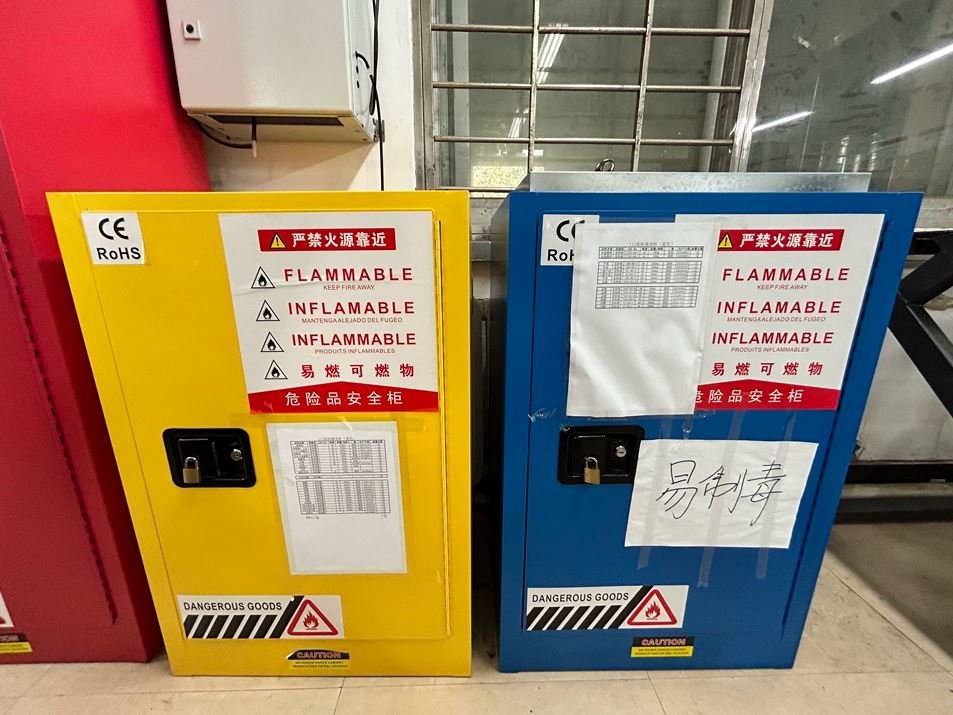
One scene reminder
Do not place power outlets or heating equipment next to an explosion-proof cabinet, and make sure the cabinet body is grounded. We print both points in the manual that ships with every cabinet, and labs still miss them. Put the cabinet away from heat sources before you fill it.
How we build ours
Every explosion-proof cabinet we ship goes through one production line in our Luoyang factory: cutting, bending, welding, coating, assembly, packing. Colors are made to order, safety yellow being the standard and gray or white available on request. We support OEM with customer branding and silk-screen printing.
Before any cabinet leaves the yard, we run a door-seal check and a fusible-link function test on every unit, and we send photos of the finished cabinet to the buyer for confirmation before loading the container.
Common questions
What is the difference between an explosion-proof cabinet and a flammable storage cabinet? They are usually the same product under different names. “Explosion-proof,” “flammable storage,” and “safety cabinet” all describe a double-wall cabinet built to hold flammable liquids and chemicals.
Do we need self-closing doors? If your local fire code or insurance inspection requires them, yes. Even if not required, they cost a little more and add a real safety layer. Most of our North American and European customers order self-closing.
Can the cabinet color and labeling be customized? Yes. Standard is safety yellow with warning labels. We also produce gray, white, or custom colors, and we can print your logo, handling instructions, or safety wording on the doors.
What should we prepare before asking for a quote? A list of the chemicals you store, their container sizes, and your total volume. With that, we can recommend the right gallon size and shelf layout in one reply.
Can you ship to our country? We ship worldwide with standard export packing, labeled and documented for customs. Tell us the destination port and we will quote the freight together with the cabinets.
The short version
Material, capacity, shelves, and door type. Check those four and you will make a better decision than someone who reads a hundred spec sheets. And if you are not sure, send us your chemical list. We will do the math with you.
How to Choose High-Density Employee Lockers: Steel 12-Door Knockdown Guide
Door count, ventilation, and frame gauge: what matters when you outfit a hundred-person locker site.
Safe Chemical Storage: PP Container Cabinet Parameters for Laboratories
Acid and alkali resistance, tray design, and material thickness to check before buying PP cabinets.
Corrosion-Resistant Storage: PP Cabinets for Laboratories
PP cabinets for corrosion-resistant storage: material choice, trays, and what labs should verify.