
Steel vs Wood TCM Medicine Cabinets: Which One Belongs in a Modern Pharmacy?
Ask an older pharmacist what a TCM medicine cabinet should be made of and the answer is usually wood. Ask the pharmacist who has replaced one in the last five years and the answer usually changes. The traditional wall of small wooden drawers looks right, but it brings a set of problems that follow the pharmacy around for decades.
Here is the steel vs wood question without the romance: what each material actually does to your herbs, your labor, and your renovation budget.
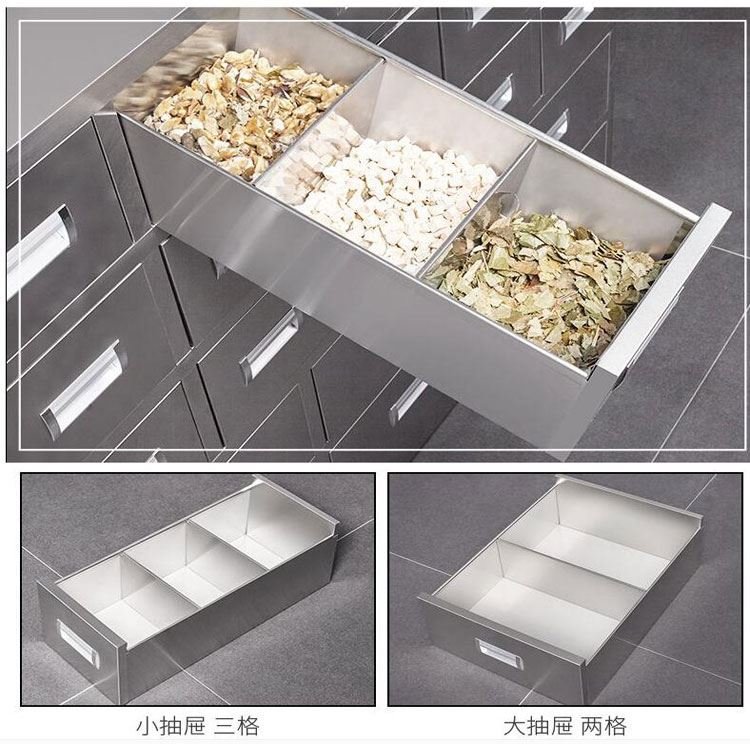
What wood does well, and what it hides
Wood cabinets earn their place with looks and craft. The deep red lacquer, the brass pulls, the smell of a proper herb room: these are real selling points for a pharmacy that serves a nostalgic clientele. A well-made wooden cabinet is also stable, and a good one holds its drawers for a long time.
But wood is a material with a job description, and that job description ends where modern pharmacy begins. Timber swells with humidity and shrinks with dry heat, which is exactly the range of climates an herb room cycles through. Drawers that fit in November stick in July. The wood itself absorbs oils and moisture from the herbs, and once a drawer lining smells of a previous herb, that smell does not leave.
The pest problem that nobody puts in the brochure
Herb drawers are full of food, and food attracts three things: weevils, moths, and moisture-loving mites. Wood gives all three a place to live. Insects tunnel behind drawer fronts, ride the joints between shelves, and colonize the cabinet even when the pharmacy keeps the herbs sealed.
Steel removes the habitat. There is nothing to tunnel into, no grain to hold eggs, and the cabinet can be wiped down with the same wash-down products the pharmacy already uses on its counters. For pharmacies that compound, this is the difference between a cabinet you clean and a cabinet you fight.
Ten years of drawers: the durability math
A heavy dispensing cabinet is opened hundreds of times a day. The drawer slides on a wooden cabinet wear at the wood-on-wood contact points, and repair means replacing runners, re-gluing panels, or a full refinish. On a steel cabinet the drawers run on industrial ball-bearing slides that are a standard spare part: twenty minutes to replace, from the front, no refinishing.
| Point of comparison | Solid wood | Steel (powder-coated) | |
|---|---|---|---|
| Weight | Heavy, hard to move after install | Heavy steel, but modular and relocatable | |
| Humidity and climate | Swells, shrinks, sticks | Stable in all climates | |
| Pests | Insects tunnel and breed | Nothing to tunnel into | |
| Cleaning | Absorbs, stains, smells | Wipe-down surfaces | |
| Drawer slides | Wood-on-wood, wears out | Ball-bearing, replaceable spares | |
| Fire risk | Combustible | Non-combustible shell |
The look question: steel in a traditional pharmacy
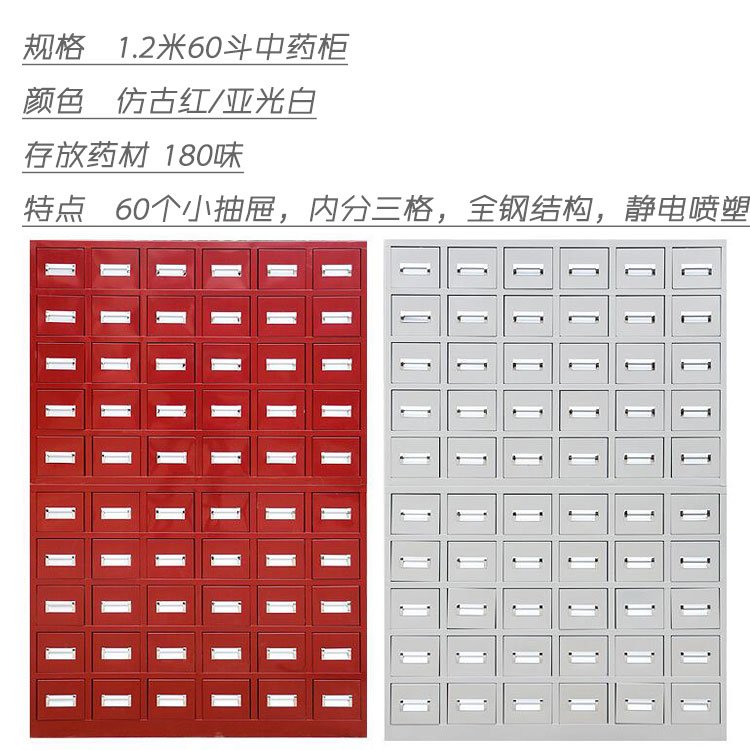
The honest objection to steel is aesthetic: a silver metal cabinet changes the room. The answer we build is that you do not have to choose. Powder coating puts a traditional deep red, or antique white, finish on the same steel body, and the cabinet reads as a classic herb cabinet from two meters away. The difference appears only when you open a drawer: metal compartments, smooth slides, and the same three-cell dividers for herb separation inside.
Fire and insurance: the quiet advantage
A pharmacy storeroom full of dried plant material is a fire load. Wooden cabinetry adds to it. A steel cabinet is a non-combustible shell that contains a fire instead of feeding it, and in several markets insurance assessors price that difference directly. This is not a headline feature, but it is the one that matters on the worst day.
Customization: more than drawer color
Steel gives the cabinet builder options wood does not. Drawer counts from 20 to 60 and more, three-cell and four-cell dividers inside drawers, lockable sections for controlled herbs, integrated cashier counters, and powder coat colors matched to the pharmacy brand. Wood can be built to order too, but every structural change costs weeks on a joinery bench. On our line, a drawer count change is a drawing change, and drawings change in days.
What the renovation budget says
Price per drawer is the fair way to compare, because cabinet sizes differ. A solid wood cabinet with traditional joinery costs more per drawer before shipping, and the cost climbs with every moving part: dovetailed drawers, brass fittings, hand-finished lacquer. Steel cabinets price at a fixed per-drawer rate because they are made on a production line, and the powder coating is applied in the same bake as the body, not as a separate craft step.
Shipping is where wood hurts most. A wooden cabinet of this size ships as cargo freight with packing that must protect the finish, and any water exposure in transit ruins the lacquer. Steel ships strapped with corner guards, and the powder coat survives a rough container ride that would mark a wooden case. Delivery damage claims, which push the real cost of wood up, are rare on our steel line.
Common questions
Is a steel cabinet acceptable for a traditional pharmacy? Acceptable is the wrong word. With a traditional red powder coat finish it is indistinguishable at a distance, and it meets the hygiene expectations that inspectors hold for modern pharmacies.
Do steel drawers damage the herbs? No. The drawers are finished with the same powder coat as the body, and removable dividers keep herbs in separate cells. Ventilation and sealing follow the same rules as any herb storage.
How many drawers do we need? Count the herbs in active rotation, multiply by 1.3 for growth, and add a drawer per staff pharmacist for private stock. Our 60-drawer and 80-drawer models cover most pharmacies, and the drawer math is written out in detail in our pharmacy cabinet guide.
Can the cabinet be moved if we relocate? Yes. A steel cabinet ships with protective packing and bolts as a complete unit or in sections depending on size. Moving a wooden cabinet that size usually means rebuilding it.
What colors are available? Antique red, matte white, dark walnut wood-effect, and any custom RAL color. The wood-effect powder coat keeps the traditional look without the wood.
Does steel make the dispensing counter noisier? Drawers close with a solid sound on the ball-bearing slides. If the pharmacy wants softer closing, we fit damped slides at the build stage at a small upgrade cost.
Do you recommend replacing a working wooden cabinet? Only when the drawers stick, the lining smells, or the pharmacy is renovating anyway. A sound wooden cabinet still does its job. When it starts costing labor time, the steel replacement pays back fast, and our 60-drawer red cabinet fits the same footprint as the traditional case it replaces.
How does the soak-up test work with steel? The same spill that stains a wooden drawer wipes off a powder-coated surface. That is why compounding pharmacies and clinics in humid coastal regions have been the first to switch: the cleaning routine they already run on their counters works on the cabinet too.
The short version
Wood wins on nostalgia. Steel wins on humidity, pests, slides, cleaning, fire, and a ten-year service life with replaceable parts. If the pharmacy is renovating once and expects to run for a decade, the steel cabinet with a traditional finish is the closer. Send us your herb list and room photo, and we will return the drawer plan and the quote.
Steel Filing Cabinet Mistakes: 5 Specs That Ruin Office Storage Before the First Audit
Five filing cabinet specs that ruin office storage: slide ratings, lock type, drawer depth, coat thickness, and anti-tip design.
Read articleLocker Room Upgrade: Before vs After Steel Wardrobe Lockers for Gyms and Staff Areas
Before vs after steel wardrobe lockers: moisture, hinges, locks, and ventilation compared for gyms, pools, and staff changing rooms.
Read articleDevice Charging Cabinet Guide: How Many Slots a 50-Student Classroom Actually Needs
Slot count math, charging speed, ventilation, and lock type: what a 50-student classroom actually needs from a device charging cabinet.
Read article