Stainless Steel vs Powder-Coated Cleaning Cabinets — Which One Survives a Wet Janitor Room
Two quotations sit on the desk for the same janitor cupboard. One is stainless steel, the other powder-coated steel, and the prices sit about thirty percent apart. Both suppliers say their cabinet suits a cleaning room, and on paper, both do.
The difference appears around month ten. In a room where the floor gets mopped daily, one finish holds its paint. The other grows orange lines at every scratch within a year. Material is not a style choice in this room. It is a maintenance budget.
What a wet janitor room actually does to a cabinet
A cleaning room attacks a cabinet in three ways at once. Water sits on surfaces and wicks into edges. Detergents and disinfectants splash onto panels and stay there overnight. And the humidity after a hot mop cycle condenses on every cold steel face, including the inside.
Plain steel with a damaged coating loses that fight slowly and quietly. Rust starts where the coating is thinnest: cut edges, screw holes, the welds around the base. None of it shows with the door closed, which is exactly why buyers forget to look.
Where stainless steel earns its price
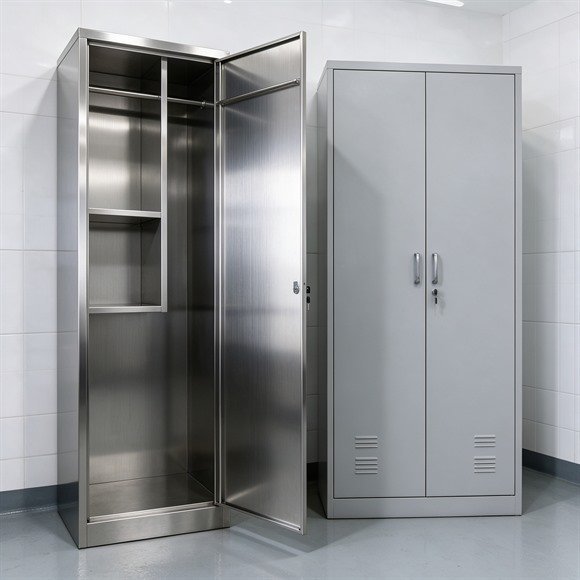
Stainless is the right answer in three situations. The room gets hosed down, so water hits the cabinet on purpose. The store holds acids or chlorine-based chemicals, which eat coatings once they find a scratch. Or the cabinet is wiped with disinfectant every shift, which is effectively a daily wet cycle.
Austenitic stainless also has no coating to fail. Its protection is the metal itself, so a scratch is a cosmetic problem rather than the start of corrosion. That single property explains most of the price difference. It matters most where the cabinet gets abused rather than admired. Ask which grade you are buying. The common 304 alloy handles chlorides far better than the 430 grade in budget offers. That difference shows up exactly in wet rooms.
Where powder-coated steel holds up fine
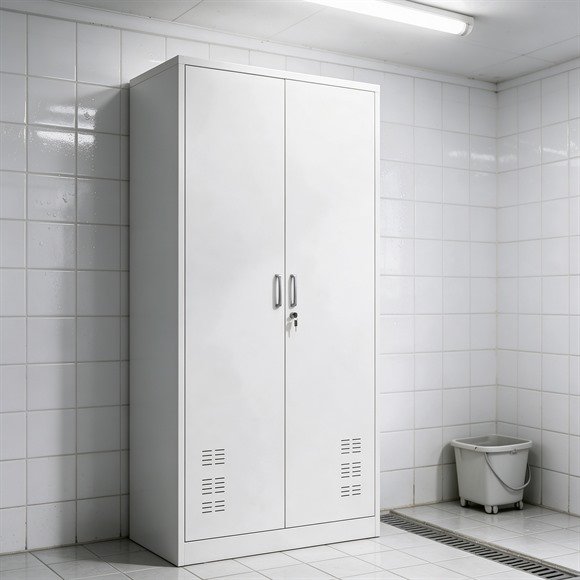
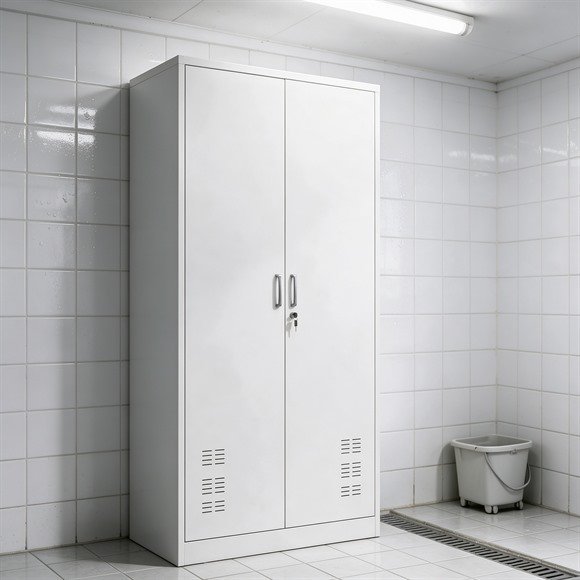
Powder coating is a baked resin layer over mild steel. In a dry room with bottled chemicals in closed containers, it performs well for years. It resists most neutral detergents, it does not dent as easily as sheet stainless, and it costs much less.
Its weak points are edges and damage. A chip from a mop handle exposes bare steel. The rust line that follows spreads underneath the coating. Powder-coated cabinets also dislike standing water. A puddle left on a top panel for a week finds its way through any pinhole. Coated models also carry colour at no penalty, which some schools use to mark stores by building. That benefit does not transfer to stainless without extra cost.
The decision table
| Room condition | Right material | Why |
|---|---|---|
| Hosed down weekly, wet floor always | Stainless | No coating to lift at the edges |
| Acids or chlorine chemicals stored | Stainless | Coatings fail once chemicals reach a scratch |
| Dry room, bottles sealed, mopped rarely | Powder-coated | Coating stays intact without washdown |
| Shared corridor cupboard, low traffic | Powder-coated | Damage risk is low, budget goes further |
| Cleaning trolleys passing daily | Stainless, or coated with care | Every scrape is a future rust line |
What the thirty percent actually buys
The price gap is not only metal. Stainless skips three costs that coated cabinets carry over the years. There is no recoating after scrapes and no rust repairs at seams or screw holes. The cabinet also needs no careful positioning away from splashes, which frees the room layout.
The honest counterpart matters too. In a dry room, that premium buys almost nothing visible. A coated cabinet that never gets scratched never shows the difference. The saved budget pays for shelves, locks or an extra bay. The gap only becomes an investment where water and chemicals are daily events.
How the two finishes fail, compared
Powder coating fails at its edges. Water creeps under the film at a cut line and rust blooms. The stain spreads in a ring that no touch-up paint fully hides. The cabinet stays strong for years, but it looks tired, and looks matter when an inspector photographs the room.
Stainless fails by staining, not by rotting. Chlorine products left on the surface leave tea-coloured marks, and cheap grades show spots in wet rooms. Those marks clean off with the right passivation treatment. The structure underneath does not participate in the failure. A stainless cabinet in a wet room still reads as new in year five.
What an inspection adds to the decision
Schools and care homes rarely get told which material to buy, but inspectors do photograph the cleaning store. They look for state of repair. No rust streaks on the doors, no swollen chipboard shelves, chemicals off the floor and behind a lock.
Two features support either material at low cost. Add a spill tray under the chemical shelf, and louvred doors that let damp mops dry. A powder-coated cabinet in a dry room photographs just as well as stainless. In a wet room, the stainless one keeps that appearance without effort. That is the whole argument in one sentence. The material decision is really a decision about how much maintenance the room will receive.
Common questions
Stainless or powder-coated cleaning cabinet for wet rooms? Choose stainless wherever water is part of the routine: hosing, daily disinfectant wipes, or a floor that never fully dries. Choose powder-coated where the room stays dry and the chemicals stay sealed. If the room is borderline, price the maintenance honestly. One repaint plus one rust repair usually closes the price gap on its own.
What is your MOQ? It depends on the model and the finish. Mixed containers with several cabinet sizes together are normal for importers.
How do you quote? Send the cabinet size, the material you are leaning towards and the destination port. A quote follows within 24 hours, and we will say plainly if the cheaper material suits your room.
Can you do OEM? Yes — silk-screen logo, custom colours on coated models and custom packing. Artwork approval happens before production.
Can we mix both finishes in one building? Yes, and it is the normal answer for schools with several stores. Stainless where the room is wet, coated where it stays dry. Staff see the difference at a glance, and the budget lands where the water actually is. The frame spec stays consistent across both, which keeps spares simple.
How is it packed? Moisture film, corner protectors and separate part packing. Cabinets ship assembled where the container allows.
The short version
Match the material to the water, not to the budget. A hosed-down or acid-bearing room justifies full stainless because there is no coating to fail. A dry, low-traffic room runs happily on powder-coated steel at a lower price. When the room sits between the two, price the maintenance of the coated cabinet honestly before you choose.
Send us the room condition and the chemical list. We will recommend one material, say why, and quote within 24 hours.
Related guides
- Stainless steel cleaning cabinet guide — what a janitor closet actually needs beyond the material.
- Janitorial chemical storage — spill trays, shelf loads and what inspectors check.
- All cleaning cabinet guides — materials, chemical control and room layout in one place.
EN 14470-1 Fire Ratings Explained — What the Test Measures and Where Buyers Assume Wrong
Three quotations for the same flammable liquids cabinet land on your desk. All three claim EN...
Read articleWarehouse Shelving Load per Shelf — How Buyers Work Out a Safe Capacity Before They Order
A warehouse supervisor stacks cartons four high across a shelf. The rating sticker on the frame...
Read articleJanitorial Chemical Storage — Spill Trays, Shelf Loads and What Inspectors Actually Check
A chemical store rarely fails because somebody mixed two products on purpose. It fails because a...
Read article