EN 14470-1 Fire Ratings Explained — What the Test Measures and Where Buyers Assume Wrong
Three quotations for the same flammable liquids cabinet land on your desk. All three claim EN 14470-1. The prices differ by forty percent, and none of the three attachments looks the same. One is a test report. One is a logo on a letterhead. One is a sentence in the quotation itself.
The standard is real, and it is a good one. The claims built around it are not equal. This guide explains what the test measures and what the classes mean. Then it lists the five assumptions behind a certificate claim worth checking before you order.
What EN 14470-1 actually covers
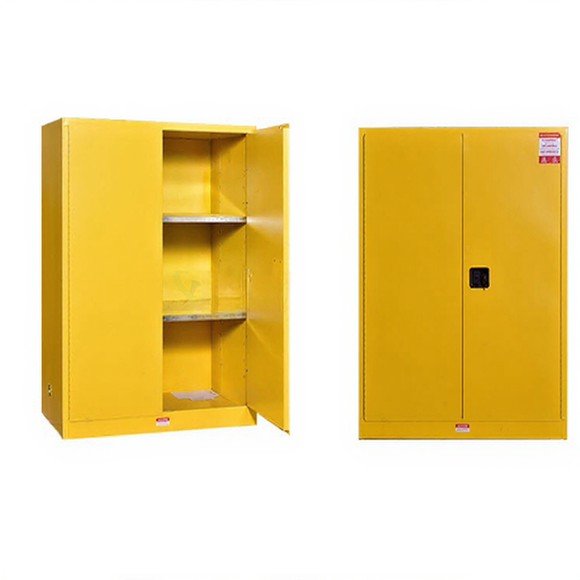
EN 14470-1 is the European standard for fire-resisting safety storage cabinets intended for flammable liquids. It sets out how a cabinet must behave in a fire, how it is tested, and how results are graded. The scope covers the cabinet as a complete assembly. That includes doors, seals, locks, vent connections and the door-closing devices.
The grading runs across four classes, written as LF 15, LF 30, LF 60 and LF 90. The number is the minutes of furnace fire exposure the cabinet survived while protecting its contents. A cabinet graded LF 60 lasted an hour in the test; LF 90 lasted ninety minutes.
What the test actually measures
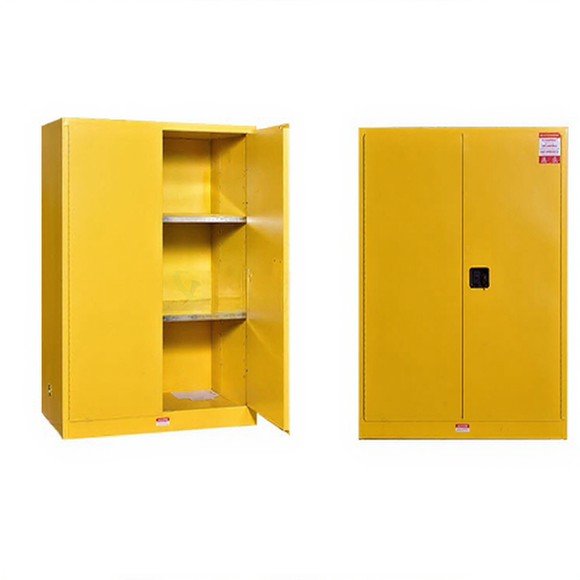
The cabinet goes into a furnace that follows a defined time-temperature curve, the same way a building element is fire-tested. While the furnace burns, three things are watched. First, the temperature inside must stay below the level where the stored liquids or their vapours would ignite. Second, the doors must remain closed and the seals must hold. Third, the self-closing mechanism must still work as designed.
If the interior stays cool enough for sixty minutes, the cabinet earns LF 60. The test measures protection of the contents, not the survival of the cabinet as a piece of furniture. A cabinet can emerge scorched and still pass, which surprises buyers who picture an intact box afterwards.
Two details in the test matter commercially. The cabinet is tested as an assembly. A ducted configuration is tested with its ducts attached, and the class applies to that setup. The self-closing doors are part of the rating. A cabinet fitted with ordinary non-closing doors is not offering the graded performance at all.
The four classes in practice
| Class | Furnace survival | Where it typically lands |
|---|---|---|
| LF 15 | 15 minutes | Small stores, low quantities, short escape and response times |
| LF 30 | 30 minutes | Standard workshop and school stores |
| LF 60 | 60 minutes | Labs and production stores with meaningful solvent volumes |
| LF 90 | 90 minutes | High-hazard stores, large drum counts, sites with slow response |
The class to buy is set by the fire scenario the site plans for, not by pride. A room the fire service reaches in ten minutes argues for a lower class. A plant with a long response chain argues for a higher one. Many permits and insurers in Europe reference the class directly. The site’s own paperwork often decides this before the buyer does.
Where buyers assume wrong
Five assumptions cause most of the disputes. The first is that the grade describes any fire. It describes a furnace test with a defined curve. It is not a guarantee for every room layout, fuel load or fire duration.
The second is treating a logo as a report. A test report has a number, a laboratory name, a date and the exact model tested. A certificate worth trusting lists all four, and the buyer can check the model against the one on the order.
The third is assuming ducting does not change anything. The class was earned with a specific venting configuration attached. A cabinet ducted differently after installation runs outside its tested state.
The fourth is believing one grade covers a whole product range. The test is done on a specific size with a specific door count. A larger cabinet from the same family was not necessarily tested at all, let alone to the same class.
The fifth is treating the standard as a legal requirement everywhere. In Europe, permits, insurers and local rules reference it to different degrees. Outside Europe, other frameworks apply entirely. The standard tells you how the cabinet behaved in a test. Whether you need it, and at which class, is decided by the site’s own obligations.
What to ask for instead of a certificate claim
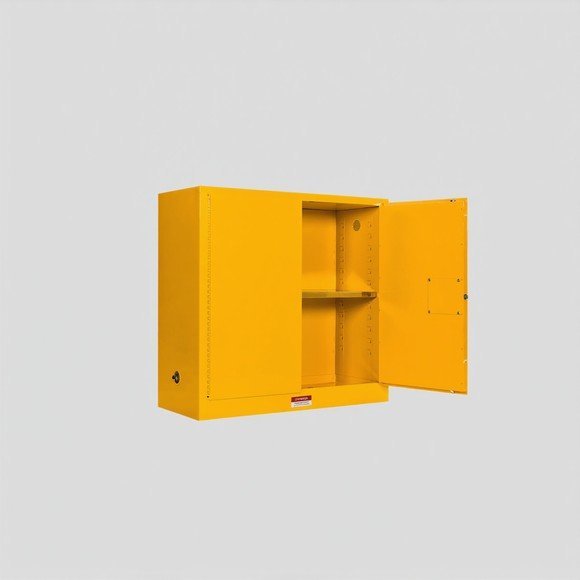
Four questions turn a vague claim into a checkable one. Ask for the test report number and the laboratory that issued it. Ask which exact model and size was tested. Ask whether the graded test was done with or without ducting, and in which configuration. Ask for the class in writing per model, not per product family.
A supplier with a real test file answers these in one email. A supplier without one answers with adjectives, and that pattern is worth more to you than the report itself. It tells you how every other technical claim in the quotation was built.
How the class shapes the rest of the order
Once the class is fixed, two specification questions follow. Self-closing doors are part of the graded assembly. Confirm the closing device, and check it shuts fully from a hand-width opening. The flame-arresting vent connections are the second item. Ducting routes, bungs and arresters all belong to the cabinet’s tested state.
Segregation inside the cabinet is a separate decision, and it does not come from EN 14470-1 at all. Acids and oxidisers do not belong with flammables, whatever the cabinet’s grade. That rule is why most labs need more than one cabinet type in the storage plan.
Common questions
What does EN 14470-1 actually test? It tests a complete cabinet assembly in a furnace against a defined time-temperature curve. It passes at a class if the interior stays below the ignition temperature of the stored liquids. The doors must stay closed with seals intact, and the self-closing devices must keep working for the graded duration.
What is your MOQ? It depends on the model and the finish. Mixed containers with several cabinet types together are normal for importers.
How do you quote? Send the cabinet size, the class your site plans for and the destination port. A quote follows within 24 hours, with the venting configuration written in.
Can you do OEM? Yes — silk-screen logo, custom colours and custom manuals. Artwork approval happens before production.
How is it packed? Moisture film, corner protectors and separate part packing. Cabinets ship assembled where the container allows.
The short version
EN 14470-1 grades a cabinet by furnace survival time, from LF 15 to LF 90. The number measures how long it protects flammable contents. The number is real information, but only when tied to paperwork. Ask for the test report, the laboratory name, and the exact model and venting configuration you are ordering. Check those four items and most certificate claims sort themselves out.
Send the class your site plans for and the drum count. We will come back with a matching cabinet, the venting configuration in writing, and a quote within 24 hours.
Related guides
- Flammable cabinet venting — when ducting is required and how it changes the conversation.
- Acid cabinet vs flammable cabinet — what can share a shelf and what inspectors check.
- All chemical safety cabinet guides — sizing, venting and segregation in one place.
Stainless Steel vs Powder-Coated Cleaning Cabinets — Which One Survives a Wet Janitor Room
Two quotations sit on the desk for the same janitor cupboard. One is stainless steel, the...
Read articleWarehouse Shelving Load per Shelf — How Buyers Work Out a Safe Capacity Before They Order
A warehouse supervisor stacks cartons four high across a shelf. The rating sticker on the frame...
Read articleJanitorial Chemical Storage — Spill Trays, Shelf Loads and What Inspectors Actually Check
A chemical store rarely fails because somebody mixed two products on purpose. It fails because a...
Read article