
Pathology Wax Block Cabinet Guide: Drawer Depth and the Detail Labs Get Wrong
Pathology Wax Block Cabinet Guide: Drawer Depth and the Detail Labs Get Wrong
Pathology departments store their work in wax blocks, and the cabinet that holds those blocks decides how long the work survives. Buy the wrong drawer depth, and ten years of patient tissue history turns into a game of Tetris that no technician enjoys.
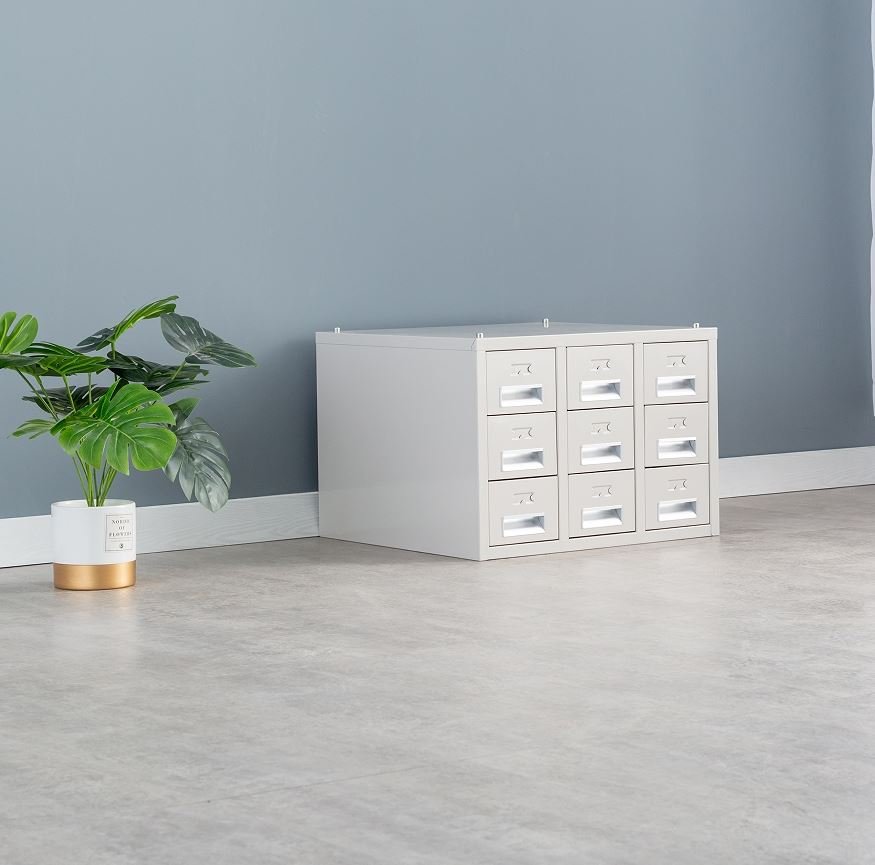
Most buyers check the cabinet height and the drawer count, then stop. The detail that actually gets them into trouble is drawer depth, and the second one is the label system. This guide covers both, plus the layout decisions that matter before the cabinet arrives.
Wax blocks are permanent records, not supplies
A wax block holds tissue that cannot be re-cut. Once a block is embedded, the cabinet becomes the archive. That changes the buying logic: you are not buying storage, you are buying retrieval. A drawer that jams, a label that peels, or a cabinet that runs out of space all mean the same thing: a record that cannot be found when the patient comes back.
Think in decades, not in the current backlog. A pathology department that processes 2,000 blocks a year will hold 20,000 blocks after ten years, and the cabinet decision made today has to carry that number.
Drawer depth: the number labs get wrong
Standard wax blocks are thin, but the drawer has to do more than hold a single row of them. The practical sweet spot is a drawer deep enough for blocks to stand in organized rows with a label visible on top, not deep enough for blocks to pile three layers high. Piled blocks hide the bottom layer, and hidden blocks are lost blocks.
| Drawer style | What it suits | Watch out for |
|---|---|---|
| Shallow row drawers | Single row of blocks, quick scanning | Needs more drawers for the same volume |
| Deep storage drawers | Bulk storage, high volume | Blocks pile and labels vanish |
| Adjustable divider drawers | Mixed block and slide storage | Dividers must lock, or they slide |
Ask the supplier for the internal drawer depth and the number of rows a drawer takes with blocks standing. Do not accept the cabinet depth as an answer: a 50 cm cabinet body can hide a 40 cm drawer, and that difference decides whether the technician sees every label or digs for every record.
The label system outlives the technician
Wax block labels fail in two ways: they peel off, or they fade. Paper labels lift in warm rooms. Printed labels on the drawer front wear at the pull point. The label system that survives is engraved or printed on a plate, fixed so it does not sit under the pulling hand.
Numbering matters more than names. A block numbered by year and sequence finds itself in five seconds in any cabinet. A block labeled only with a name depends on a paper index, and paper indexes walk away. We ship cabinets with numbered drawer fronts as standard, with name labels or hospital-specific codes printed to order.
Capacity math that holds up
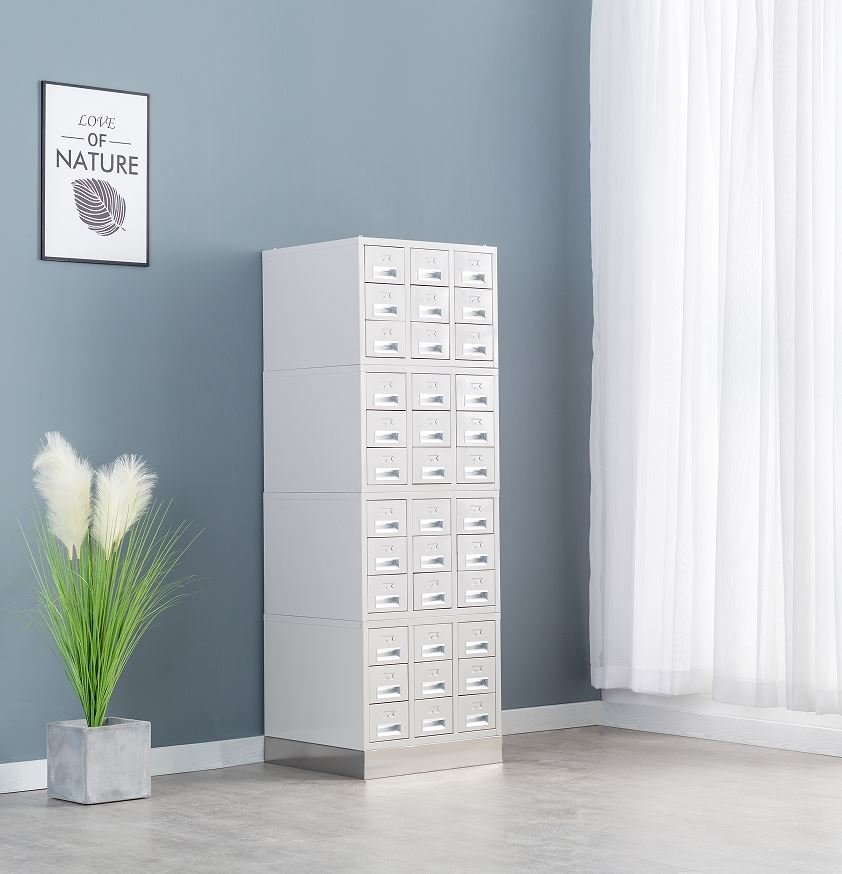
Count the blocks made per year, multiply by the retention period, and divide by the blocks per drawer. A cabinet with 18 drawers at 400 blocks per drawer holds 7,200 blocks, which covers a small department for years and a busy hospital for months. Buy for the retention period your regulations require, and add two empty drawers for the records that arrive between cabinet deliveries.
We build drawer counts to order. If a department runs 24-drawer cabinets and the next building has room for 30, the 30 leaves the factory the same way. The drawer pitch and the label layout stay consistent, so a technician moving between sites finds the same system.
Cabinet layout: where to put it in the lab
A wax block cabinet sits in the archive room, not in the cutting room. Formalin fumes and staining solvents near the microtome shorten the life of paper labels and steel runners. Give the cabinet a dry, ventilated room with stable temperature. Install it on a level floor: a tilt of even a few degrees makes drawers slide open on their own, and an open drawer in a dark archive is a block that falls out.
Leave working space in front of the cabinet. The technician needs to pull a drawer, lay it on a work surface, and read labels without crouching. The space in front of the cabinet is as important as the cabinet itself.
Steel, finish, and the lab environment
Pathology storage sits near formalin, staining solutions, and decades of humidity cycles. Powder-coated steel handles it when the coating is epoxy-based and the drawer runners are designed for repeated pull-outs. Bare metal drawer runners are the part that fails first in lab cabinets, so check the runner design before the paint color.
Stainless versions cost more and pay off in high-humidity storage areas. For most departments, epoxy-coated steel with stainless drawer fronts on the most used rows is the balance we recommend: the touch points stay clean, the budget stays sane.
How we build ours
Wax block cabinets come off our standard production line in Luoyang, with the drawer pitch cut to the block size you use. Every drawer is tested loaded before packing, and we ship with drawers locked so the container ride does not knock them out of square. Label plates are fixed at the factory: number plates, name strips, or hospital codes.
Before production we send a drawer layout drawing: block orientation, divider positions, and label placement. Confirm that drawing and the cabinet arrives the way the technician described it, not the way a catalog thought it should be.
Common questions
What is the standard wax block size you build drawers for? We cut drawer pitch to your block dimensions. Send the block size and the orientation you store them in, and the drawers are spaced for that size with room for fingers, not force.
Can one cabinet store blocks and slides together? Yes, with divided drawers: blocks on one side, slide trays on the other. The dividers lock into place so they do not drift into the next row.
How do we handle a growing department? Buy for the retention period and add two spare drawers. When growth outruns the cabinet, order the next unit with the same drawer pitch and numbering scheme, so the archive continues without a break.
Can the drawer fronts carry our hospital codes? Yes. Engraved or printed plates with your numbering system, name strips, or barcode holders are all standard requests.
What should we check on delivery? Open every drawer, run a finger along the label edges, and confirm the numbering sequence against the layout drawing. It takes one technician one hour, and it catches the rare transit shift before the cabinet is filled.
How do we handle blocks from different years in the same cabinet? Number sequentially by year and block number, and assign drawer ranges to year batches. The numbering system is easier to change than the cabinet, so plan the numbering before you order the drawer count.
The short version
Check internal drawer depth, plan a label system that outlives the staff, and buy for the retention period plus two drawers. Then send us the block dimensions and the yearly count: we will draw the cabinet that fits, before any steel is cut.
TCM Medicine Cabinet Guide: How Many Drawers Does a Pharmacy Actually Need?
Count the herbs, multiply by 1.3, and order that many drawers.
Safe Chemical Storage: PP Container Cabinet Parameters for Laboratories
Acid and alkali resistance, tray design, and material thickness to check before buying PP cabinets.
Explosion-Proof and Chemical Safety Cabinets: How to Choose
Steel construction, gallon sizes, shelf load, and self-closing doors: four checks before you buy.