
Heavy-Duty Workbench Factory Guide: What OEM Buyers Check Before a Container Order
Heavy-Duty Workbench Factory Guide: What OEM Buyers Check Before a Container Order
Buying one workbench is easy. Buying a container of workbenches is where the mistakes get expensive, because the bench that looks fine in a photo can arrive with a tabletop two millimeters thinner than the sample, and you will not see it until the first hammer blow dents the edge.
This guide is written from the factory side of OEM workbench orders: what we check before we ship, and what a buyer should check before they pay. Most of it comes down to five numbers and three tests.
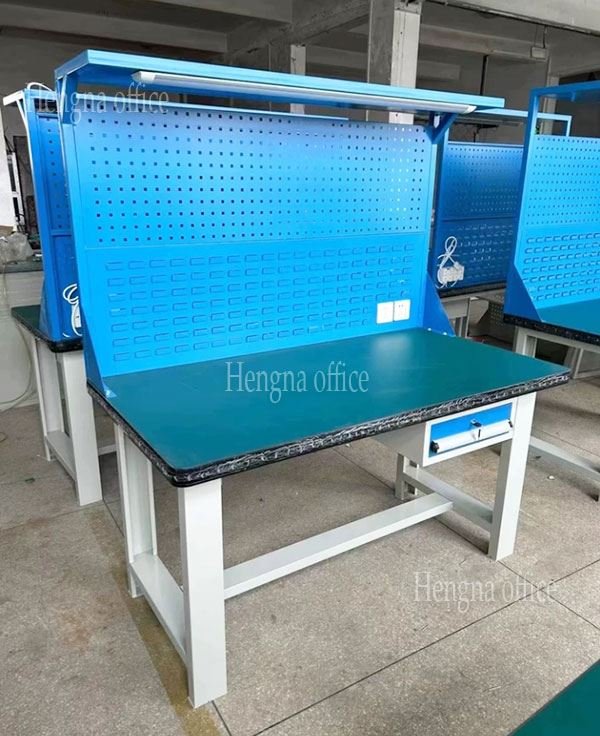
The five numbers that define a workbench
| Spec | What we build | Why it matters |
|---|---|---|
| Top plate thickness | Heavy-gauge cold-rolled steel | Thin tops dent under hammers and vices |
| Frame | Welded square tube frame | Bolted frames loosen; welded frames do not |
| Static load rating | Rated per square meter | Engines and gearboxes are heavy |
| Working height | Built to buyer ergonomics | A bench 40 mm too high hurts by noon |
| Drawer slides | Ball-bearing, full extension | The first part that fails on cheap benches |
Ask for all five numbers in writing. A supplier who cannot give a load rating in kilograms per square meter is quoting you a table, not a workbench.
The three tests before the container leaves
Test one: the loaded drawer. Fill a drawer with its rated weight, pull it out to full extension, and hold it. A ball-bearing slide holds the drawer level. A cheap slide lets the front drop, and that drop becomes a jammed drawer by the third month in a workshop.
Test two: the top plate strike. Strike the tabletop with a hammer at the center and at the edge. The bench should ring clean and show no dent. This is the test that separates heavy-duty from the lookalike: two millimeters of steel difference shows up immediately under a hammer.
Test three: the wobble check on a flat floor. Every bench we ship sits on four adjustable feet, and every bench is set on a granite plate before packing. If a bench wobbles after shipping, it is the floor, not the bench. Buyers should check the same way on delivery, before the container crew leaves.
OEM work: the details buyers forget to specify
Container orders usually mean the buyer has their own brand, their own color, or their own spec. The details that cause rework are the boring ones:
- Drawer layout. A mechanic needs shallow drawers for spanners, deep drawers for power tools, one flat drawer for manuals. Specify the mix, not just the count.
- Vice plate. If the bench will hold a vice, say so before production. We weld the reinforcement under the top plate at the factory, not at the buyer warehouse.
- Grounding point. Electronics benches and painting benches need a grounding lug. It costs nothing in production and is painful to retrofit.
- Edge finish. Folded and rounded edges protect hands and forklifts. Raw cut edges rust first and cut second.
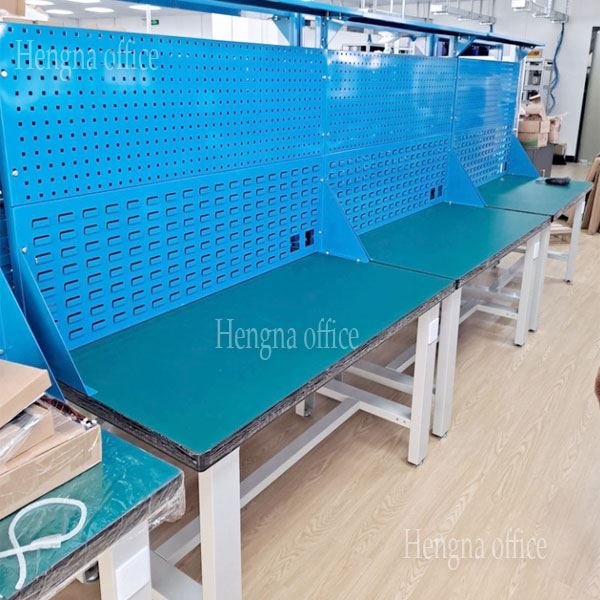
Packing for a container ride
A workbench weighs what it weighs, and containers move. The packing decisions that matter are: benches shipped assembled on pallets with foam between tops, drawers locked shut and strapped, adjustable feet wound in, and every pallet wrapped twice. Knockdown shipping saves freight on large orders, and the assembly is designed for two people and a hex key, not a workshop full of technicians.
Ask the supplier for a packing photo before loading. A factory that will not show you the inside of the container before it closes is a factory that has not packed it yet.
What happens when a container order goes wrong
The most common failure in workbench container orders is not the bench. It is the spec sheet that changed between the quote and the production order. The buyer changes the drawer count in an email, the factory produces the old drawing, and the container arrives with forty benches nobody wants.
The fix is boring and effective: one signed drawing. Every production run starts from a drawing that shows the top thickness, the frame, the drawer layout, and the color. The buyer signs it, the factory cuts steel from it, and the pre-shipment photos are checked against it. We will not start production until that drawing is confirmed, and neither should you.
After the container: the questions nobody asks in time
Two things come after delivery: spare parts and warranty. A workshop bench is a working surface, and working surfaces get dented, chipped, and re-welded. The buyer who asks about spares before the order gets them in the same container: spare drawer slides, spare feet, touch-up paint matched to the color batch. The buyer who asks after the first damage waits for a courier and pays for air freight on a drawer slide.
On warranty, the honest answer matters more than a long one. Our frames and welded structures are covered for years, because a welded frame failing is a manufacturing fault and we stand behind it. Drawer slides and locks are wear parts, covered for a shorter window and always stocked as spares. Get both numbers in writing, and get the warranty in the same document as the signed drawing, so there is one paper for the whole order.
Common questions
What top thickness do we need? Light workshop use tolerates a medium top. Hammer work, vice work, and engine work need the heavy top. Send us the heaviest thing the bench will hold and we will spec the plate from that.
Can you match our existing benches? Yes. Send the dimensions and a photo of the current bench, and we match height, color, and drawer layout so the new row looks like it was always there.
How many benches fit in a container? It depends on size and packing. Assembled heavy-duty benches pack roughly 20 to 30 units in a 40-foot container. Knockdown doubles that. We quote both and let the freight math decide.
Do you install? We ship with a one-page assembly guide for knockdown orders and a packing checklist for assembled ones. Installation on site is the buyer side, and the guide is written for two people with hand tools.
What is the lead time for a custom OEM order? Standard production runs within the normal window. Custom drawer layouts and vice plates add drawing time up front, which is why the signed drawing step comes first.
Should we order assembled or knockdown? Knockdown wins on freight cost and for sites with narrow doors. Assembled wins when the buyer wants benches out of the box and in service the same morning. Mixed containers work too: assembled for the main workshop, knockdown for the remote sites.
The short version
Get five numbers in writing, run the three tests, and sign one drawing. The workbench that survives a container ride and ten years of hammers is decided on paper before any steel is cut. Send us your heaviest load and your drawer mix, and we will return the drawing with the quote.
Tool Cabinets and Tool Carts: Heavy-Duty Drawers for Workshops
How one combination cabinet with drawers, doors, and pegboard replaces three separate workshop units.
Workshop Organization Solutions: Perforated Panel Tool Systems
Why pegboard layouts fail in workshops, and how a steel perforated panel system fixes tool organization.
Smart Phone Storage Lockers: Barcode and Face-Recognition Models
Door count per site size, power layout, and management options for phone storage lockers.